Can automotive carbon brushes meet the requirements for long-term operation in household appliances?
Understanding the Differences Between Automotive and Household Appliance Requirements
When evaluating whether automotive parts carbon brushes can meet the requirements for long-term operation in household appliances, it is necessary to examine the differences between the two application environments. Automotive systems often experience fluctuating loads, variable temperatures, and intermittent working cycles, while household appliances generally operate under stable and continuous conditions. Appliances such as vacuum cleaners, mixers, washing machines, or fans require consistent wear behavior, smooth commutation, and controlled heat generation over extended periods. Jiangsu Hailing Carbon Products Co., Ltd., with more than two decades of experience in carbon brush production, understands these distinctions and applies advanced research capabilities to assess cross-compatibility. Although some automotive carbon brush formulations can be adapted for home appliances, suitability depends on factors such as material composition, hardness, lubrication characteristics, and electrical performance. Hailing’s strong emphasis on independent innovation and upgraded equipment supports the precise evaluation needed for these applications.
Material Characteristics and Their Impact on Long-Term Appliance Operation
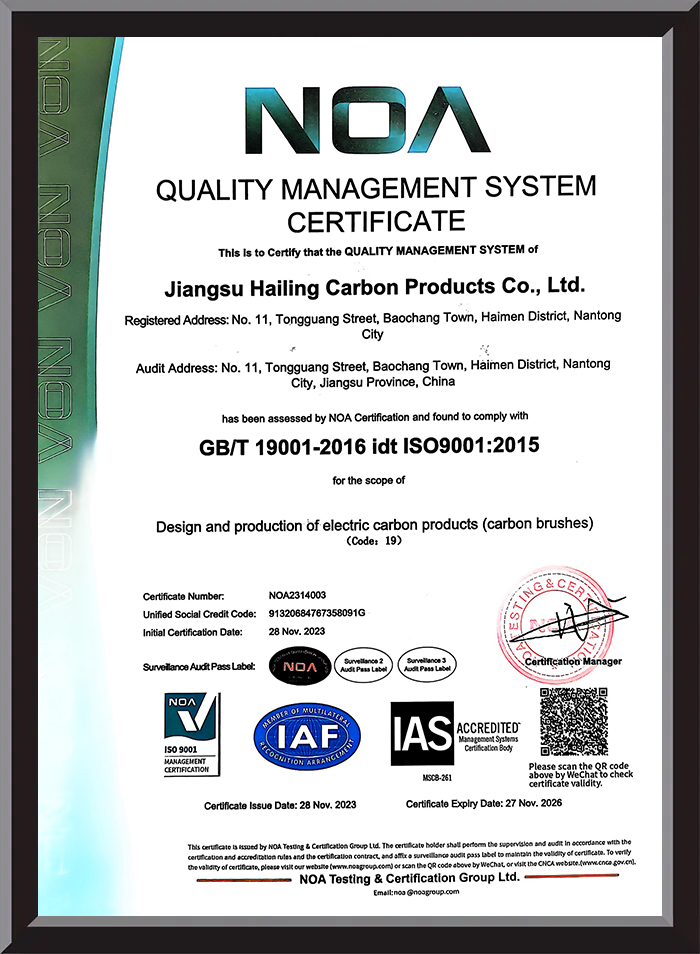
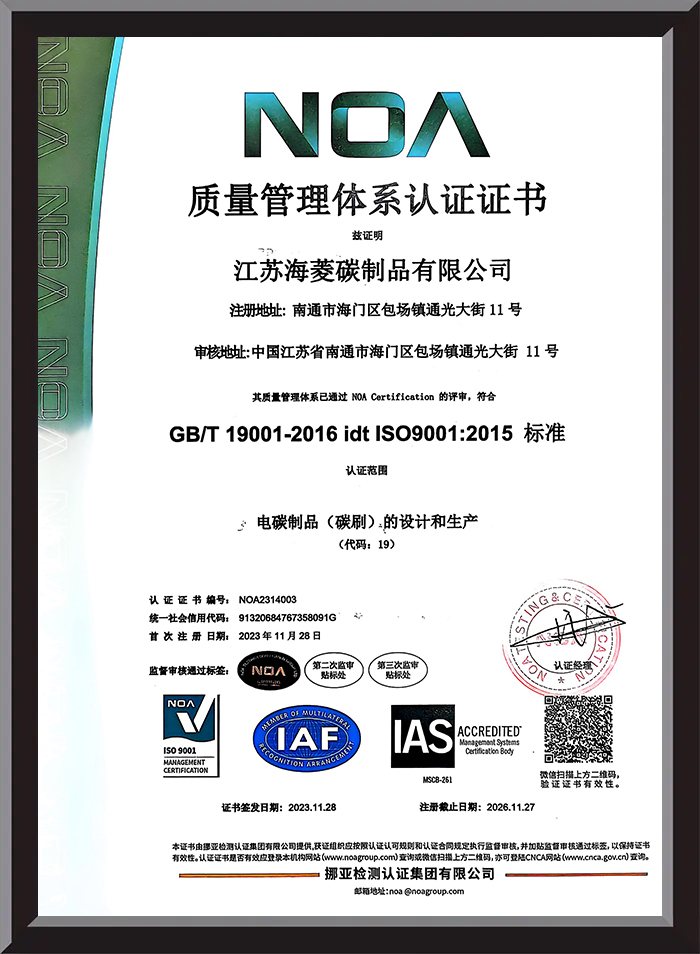
The material composition of automotive parts carbon brushes is typically optimized for high-current endurance and resistance to temperature fluctuations. Household appliances, however, require materials that maintain stable frictional properties and minimal noise during long-running periods. Jiangsu Hailing Carbon Products Co., Ltd. leverages ongoing material research and advanced manufacturing methods to adjust formulations for different motor types. For a brush to operate effectively in home appliances, it must achieve a balance between conductivity, wear resistance, and friction stability. Automotive formulations can meet these needs when appropriately modified, but direct substitution is not always feasible. Hailing’s strict adherence to ISO 9001 process management ensures that any adapted formulations undergo thorough validation, helping determine whether a specific brush material is suited for continuous appliance operation.
Durability Testing and Load Performance Evaluation
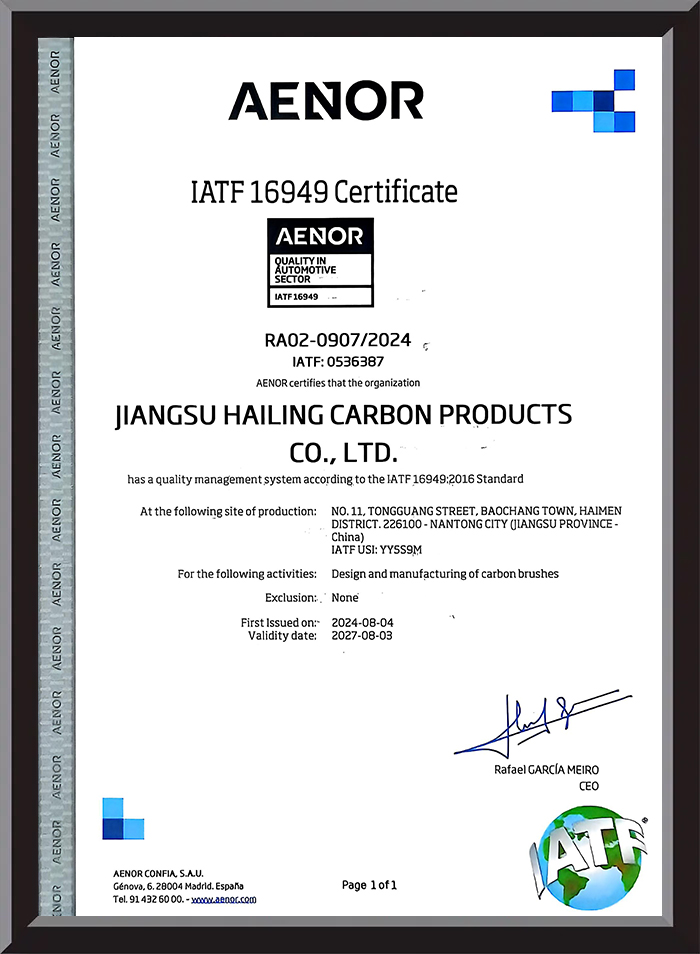
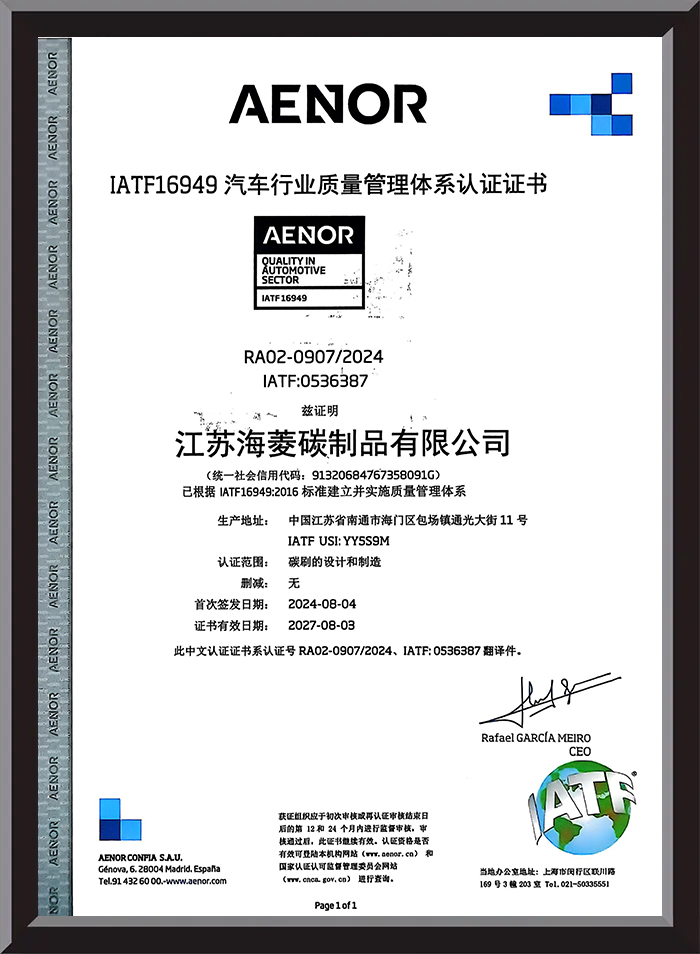
Long-term operation in household appliances requires predictable behavior under sustained loads. Automotive carbon brushes are durable but often designed for dynamic load changes rather than constant running conditions. Jiangsu Hailing Carbon Products Co., Ltd. performs detailed durability and load testing to evaluate whether a brush designed for automotive applications can also support the demands of an appliance motor. Supported by an advanced ERP management system and certifications such as IATF 16949, Hailing ensures that performance data is traceable and reliable. The company's ongoing cooperation with domestic and international motor brands and its recognition through “Excellent Supplier” awards further strengthen its capability to determine suitability across industries. Although some automotive designs may perform well in household appliances, extended operational testing is essential to confirm long-term reliability.
Evaluating Performance Through Key Technical Parameters
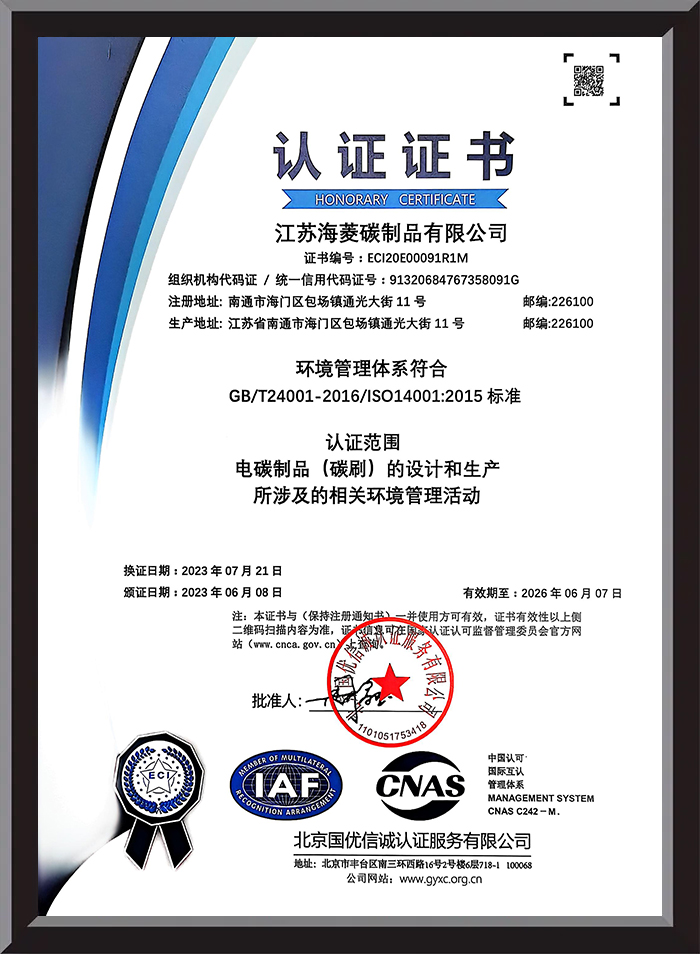
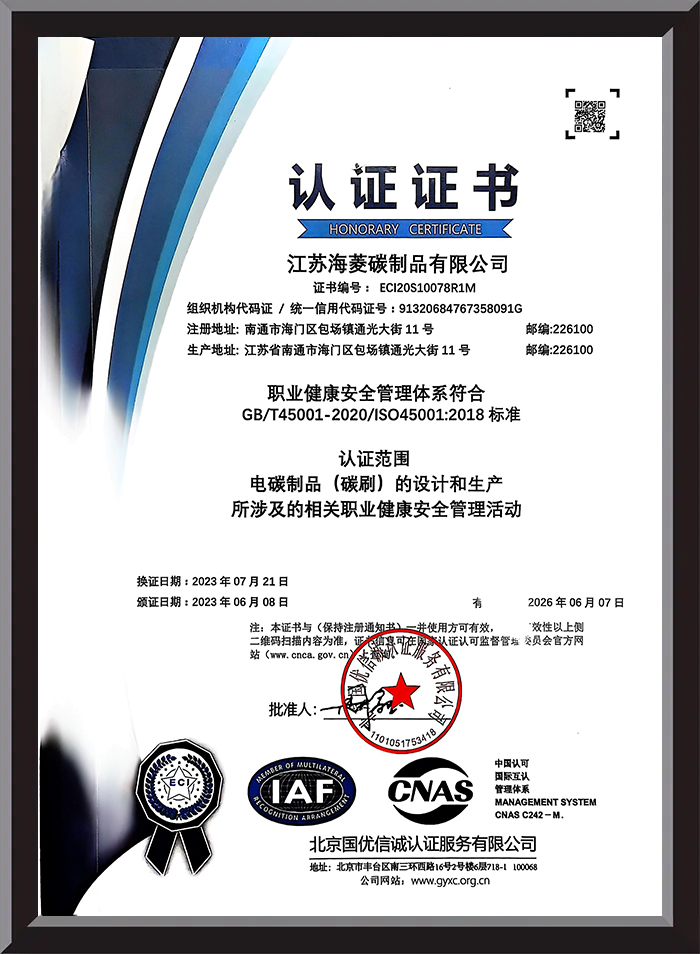
Performance parameters such as wear rate, commutation stability, contact resistance, and temperature rise are crucial in determining whether automotive carbon brushes can meet appliance requirements. Jiangsu Hailing Carbon Products Co., Ltd., certified under ISO 14001 and ISO 45001, incorporates structured testing aligned with industry standards to assess these factors. Automotive carbon brushes may excel in scenarios involving short bursts of power, but household appliances demand stability during extended cycles. Noise levels, vibration tolerance, and consistent electrical contact are also important considerations in home appliance applications. Through comprehensive analysis, Hailing identifies which automotive brush formulations can be adapted and which require modification before being applied to household motors.
Comparison of Typical Technical Expectations
| Parameter |
Automotive Carbon Brushes |
Household Appliance Carbon Brushes |
| Load Pattern |
Variable and fluctuating |
Moderate and continuous |
| Wear Behavior |
Withstands short, intensive bursts |
Predictable long-duration wear |
| Noise Levels |
Generally lower priority |
Important for user comfort |
| Heat Performance |
Designed for temperature spikes |
Requires controlled heat generation |
Customization and the Importance of Manufacturing Expertise
Customization is an essential factor in determining whether automotive parts carbon brushes can operate effectively in household appliances. Jiangsu Hailing Carbon Products Co., Ltd., recognized as a High-Tech Enterprise, applies its research, advanced production technology, and lean management practices to adjust carbon brush characteristics based on motor requirements. Whether modifying hardness, porosity, or lubricating additives, Hailing tailors brush properties to meet the demands of home appliance motors. For customers looking for an experienced automotive parts carbon brushes factory, the company’s large-scale production capacity—reaching fifteen million units per month—demonstrates stable supply capabilities. Through personalized engineering solutions, automotive designs can be adapted to achieve the consistent performance expected in long-running household appliances.
Practical Scenarios and Cross-Industry Adaptability
In certain applications, automotive carbon brushes may already align well with the needs of household appliances, particularly in devices requiring momentary high torque or intermittent operation. However, for appliances that run continuously, such as fans or vacuum cleaners, the requirements for stable friction film formation and controlled temperature rise become more prominent. Jiangsu Hailing Carbon Products Co., Ltd. evaluates these conditions by collaborating closely with motor manufacturers, ensuring that brush selection aligns with real-world usage patterns. The company’s established trademark recognition in Jiangsu and Nantong reflects its long-term commitment to quality and brand development. With continuous innovation and practice of lean management, Hailing strengthens its ability to adapt carbon brush technologies across automotive and household sectors, offering reliable solutions that match varying performance needs.
Are automotive carbon brushes resistant to wear and tear in high-frequency operation or continuous use environments?
Understanding Wear Resistance Requirements in High-Frequency Operation
When evaluating whether automotive parts carbon brushes are resistant to wear and tear in high-frequency or continuous-use environments, it is necessary to understand the operational characteristics that define these conditions. High-frequency operation often involves rapid motor rotation, frequent start-stop cycles, and fluctuating electrical loads. Continuous use environments, such as those found in industrial equipment or long-running household appliances, require brushes to maintain stable friction performance and consistent electrical contact over extended durations. Jiangsu Hailing Carbon Products Co., Ltd., with more than 20 years of development in carbon brush technology, approaches this evaluation through a combination of material research, advanced manufacturing, and strict quality control. Automotive carbon brushes are typically engineered to handle dynamic driving environments in vehicles, where temperature variations, vibration, and load fluctuation are common. These characteristics offer potential advantages in high-frequency applications, but suitability depends heavily on brush composition, hardness, lubrication properties, and the specific motor design they are intended for.
Material Composition and Its Role in Wear Performance
Carbon brush materials used in automotive motors are often formulated from graphite, copper-graphite, or resin-bonded compounds, each selected for its electrical and mechanical properties. To withstand high-frequency operation, the material must exhibit stable wear characteristics, reliable film formation, and effective heat dissipation. Jiangsu Hailing Carbon Products Co., Ltd. applies ongoing material optimization supported by independent innovation and upgraded equipment to refine these characteristics. Automotive parts carbon brushes may offer strong performance in situations requiring resistance to rapid current changes, but when applied to continuous-use conditions, consistent friction behavior becomes just as important as electrical performance. Hailing’s adherence to ISO 9001 process standards ensures that material batches undergo validation for density, porosity, resistivity, and hardness, allowing the company to determine whether a specific automotive-grade material is suitable for long-duration operational conditions.
Evaluating Durability Under Continuous and High-Frequency Loads
The durability of automotive carbon brushes in high-frequency or continuous operation depends on their ability to maintain structural stability under repetitive motion. Jiangsu Hailing Carbon Products Co., Ltd., certified under IATF 16949, conducts wear simulation tests designed to mirror both automotive and non-automotive motor environments. These tests provide insight into how different brush formulations respond to high temperatures, increased frictional cycles, and long-term contact pressure. In vehicles, carbon brushes are often exposed to intermittent operation, whereas continuous-use systems demand a more stable rate of wear. By integrating an advanced ERP management system, Hailing ensures consistent monitoring of production quality, helping identify which automotive designs can be adapted to continuous-use applications. These evaluations are essential for determining whether automotive brushes possess the long-term durability needed for equipment that runs for hours rather than minutes.
Key Performance Indicators for Wear Resistance
Several performance indicators are used to determine whether automotive parts carbon brushes are suitable for high-frequency or continuous-use environments. These include wear rate, temperature rise during extended operation, electrical noise generation, and stability of the friction film. Jiangsu Hailing Carbon Products Co., Ltd., certified under ISO 14001 and ISO 45001, applies environmentally responsible and safety-focused practices throughout the production and testing processes. Wear resistance is not determined by a single factor but rather by the interaction of material structure, motor design, commutator conditions, and lubrication additives. Automotive carbon brushes may meet wear requirements if they maintain stable electrical contact without producing excessive dust or increasing commutator wear. Thorough evaluation of these parameters helps determine whether a particular formulation can transition effectively between automotive use and continuous high-frequency applications.
Performance Comparison Factors
| Performance Factor |
Automotive Carbon Brushes |
Continuous-Use Motor Brushes |
| Operating Pattern |
Intermittent and variable |
Stable and long-duration |
| Wear Behavior |
Designed for temperature fluctuation |
Requires predictable, low-rate wear |
| Heat Dissipation |
Adapted for short bursts of heat |
Emphasis on long-term heat control |
| Electrical Noise |
Moderate priority |
Higher priority for stability |
Manufacturing Expertise and Customization Capabilities
The experience and technical capabilities of the automotive parts carbon brushes factory play a critical role in determining whether automotive designs can be adapted to continuous-use conditions. Jiangsu Hailing Carbon Products Co., Ltd., recognized as a High-Tech Enterprise, uses advanced production lines and continuous innovation to adjust brush parameters based on specific operational requirements. Through customization of hardness, lubrication additives, and structural density, Hailing’s engineering team can enhance the wear resistance of automotive carbon brushes for high-frequency operation. For customers seeking reliable supply, the company’s production capacity—reaching fifteen million carbon brushes per month—supports both large-scale automotive projects and specialized industrial applications. This flexibility allows automotive brush technologies to be modified to suit machinery, appliances, or equipment requiring continuous and predictable performance.
Cross-Application Potential and Practical Usage Considerations
There are scenarios where automotive carbon brushes naturally align with high-frequency operation demands, particularly in systems where momentary load spikes or rapid switching cycles occur. However, not all automotive formulations are suited for continuous running without modification. Jiangsu Hailing Carbon Products Co., Ltd. collaborates with domestic and international motor manufacturers, gaining insight into diverse application environments. This cooperation enables the company to refine brush characteristics to balance wear rate, stability, and heat generation. With the “Hailing” trademark recognized as a Nantong and Jiangsu Famous Trademark, the company continues to strengthen its global competitiveness by applying lean management practices and proactive technological development. Through careful assessment and targeted engineering adjustments, automotive carbon brushes can be adapted for use in both high-frequency and continuous-use environments, provided they meet the operational requirements verified through testing and material optimization.


 English
 中文简体
中文简体