How should the spring pressure of DC motor carbon brushes be determined?
Understanding the Role of Spring Pressure in DC motor carbon brushes
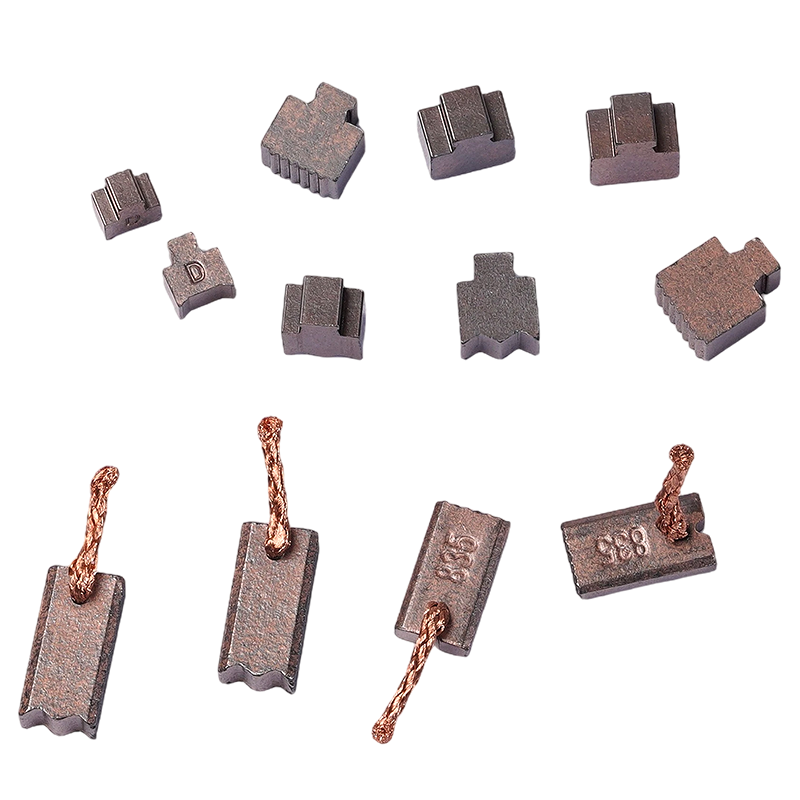
In DC motor carbon brushes, spring pressure is a key parameter that affects electrical contact stability, brush wear rate, commutator condition, operating temperature, and overall motor reliability. Properly determining spring pressure requires balancing electrical performance with mechanical durability, ensuring the brush maintains consistent contact without causing unnecessary friction. Jiangsu Hailing Carbon Products Co., Ltd., with over 20 years of experience and a monthly output of 15 million carbon brushes, has built a mature technical foundation for designing and evaluating spring pressure through continuous innovation, advanced equipment, and strict quality control.
Factors Influencing Optimal Spring Pressure
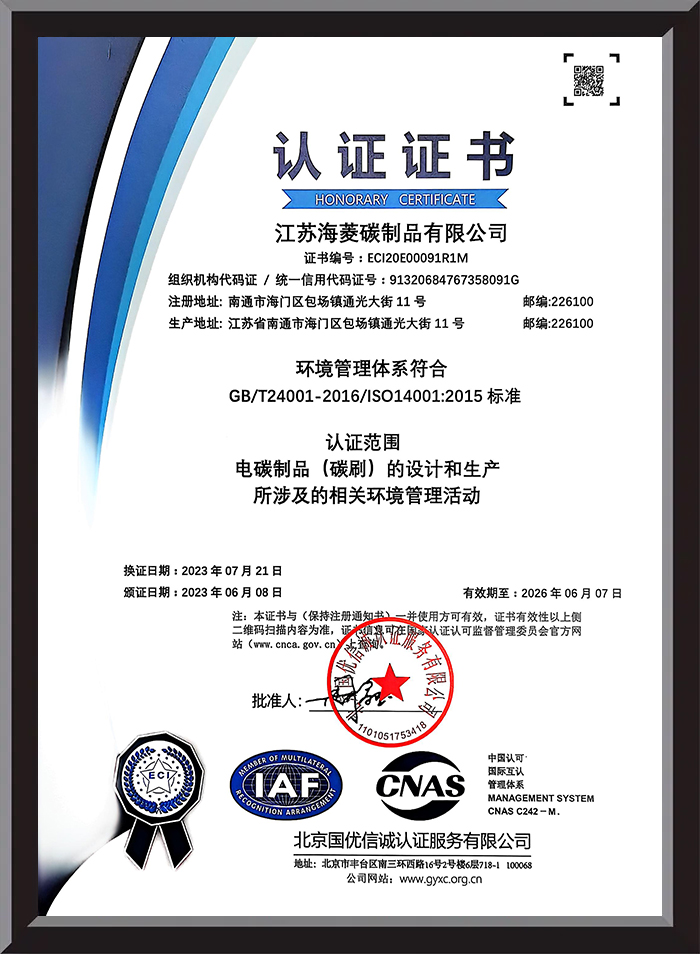
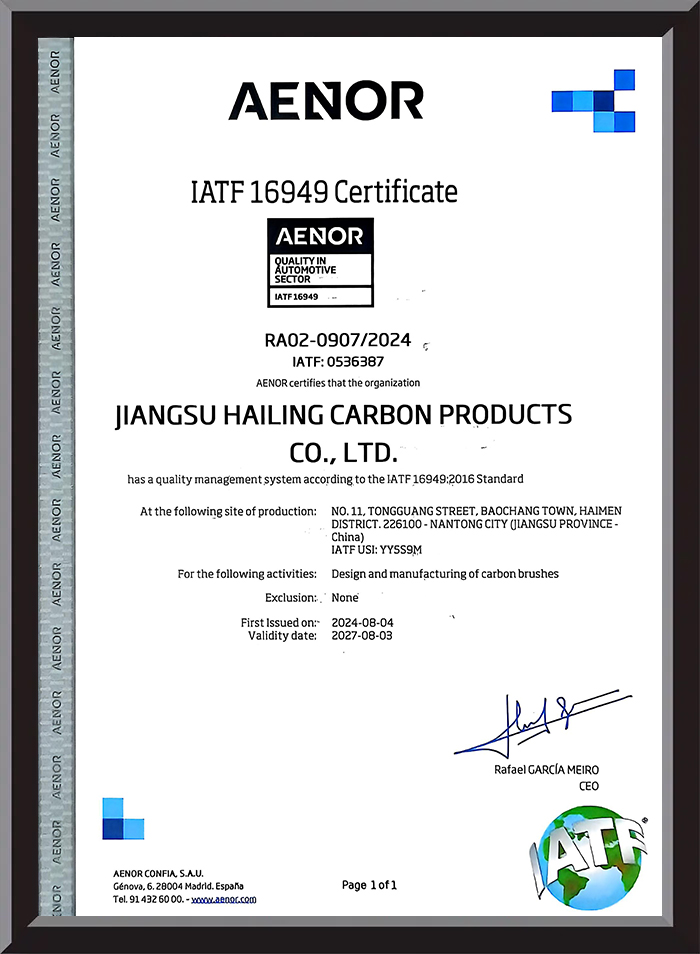
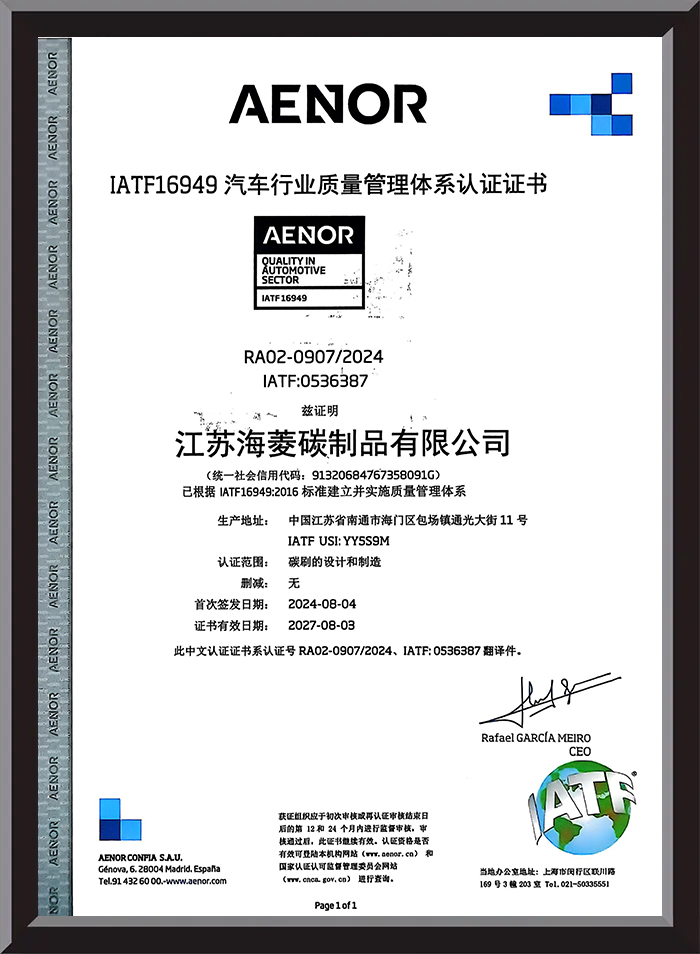
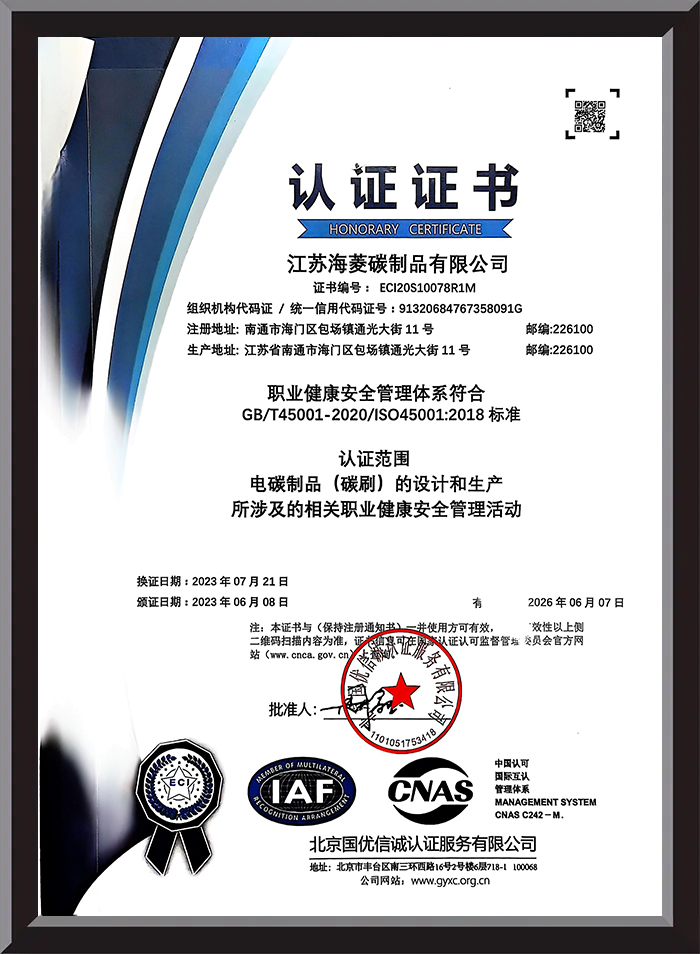
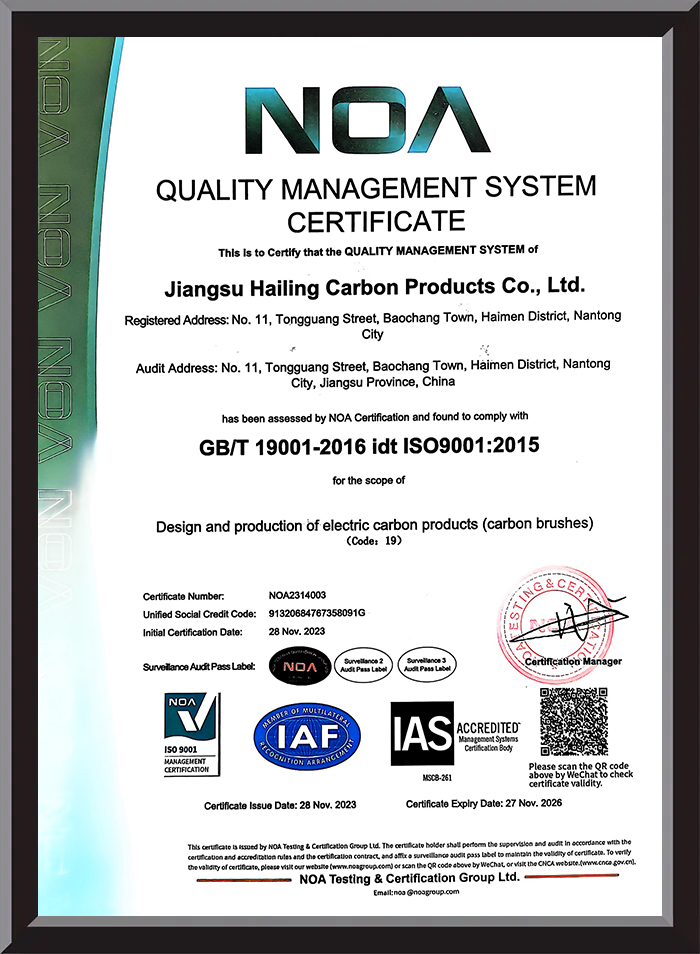
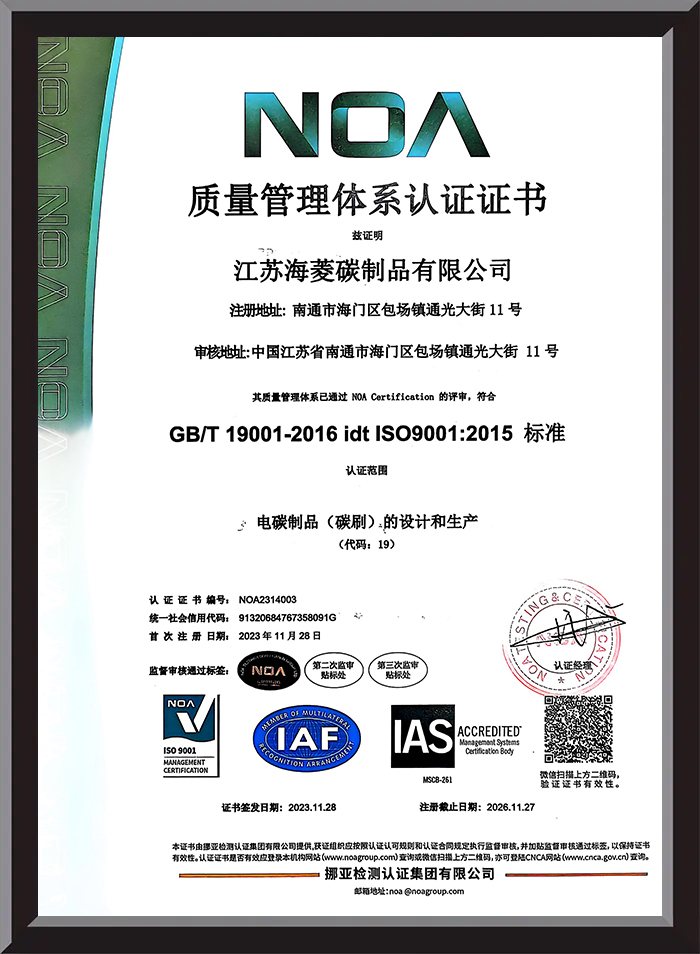
The spring pressure of DC motor carbon brushes is influenced by several interacting factors, including brush material hardness, commutator surface condition, motor speed, load characteristics, and expected service life. Hailing’s extensive cooperation with domestic and international motor brands has enabled the company to refine these parameters under various application environments. With certifications such as ISO 14001, ISO 45001 and IATF 16949, and full-process ISO 9001 quality control, the company ensures that each batch of brushes is evaluated with precise and consistent standards. By integrating empirical testing with ERP-based production management, Hailing maintains stable performance for different brush grades and motor structures.
Typical Pressure Ranges and Application Considerations
Different motor sizes and brush configurations require different spring pressure values. Lower pressure may lead to electrical noise, arcing, and unstable current flow, while excessive pressure can accelerate wear and increase commutator temperature. Therefore, the pressure setting requires careful balancing. Based on industry practices and long-term testing from manufacturers like Jiangsu Hailing Carbon Products Co., Ltd., many motors fall within certain common ranges depending on speed and brush geometry. The following table summarizes typical ranges found in DC motor carbon brushes for reference:
| Motor Type |
Typical Spring Pressure (kPa) |
Common Brush Size Category |
| Low-speed DC motors |
12–16 |
Medium to large brushes |
| General-purpose DC motors |
16–20 |
Standard industrial brushes |
| High-speed DC motors |
20–26 |
Small precision brushes |
Methods Used to Determine Proper Spring Pressure
Determining the correct spring pressure for DC motor carbon brushes involves laboratory measurement, simulated operational testing, and field validation. Hailing applies new equipment and independent innovation to carry out these evaluations, ensuring stable contact force through endurance testing and vibration analysis. The company’s High-Tech Enterprise qualification reflects its ability to integrate engineering tools and digital testing platforms for real-time pressure curve analysis. Engineers compare different spring materials, geometries, and tension ratings to match the intended electrical load and motor duty cycle. The ERP system further standardizes production data, allowing traceability and optimization across product batches.
| Evaluation Method |
Testing Purpose |
Key Outcome |
| Static pressure measurement |
Determine baseline brush loading |
Ensures correct initial force |
| Dynamic operation testing |
Observe pressure behavior under rotation and vibration |
Validates stable contact |
| Wear analysis |
Review brush and commutator wear trends |
Optimizes long-term durability |
Effects of Incorrect Spring Pressure
If the spring pressure of DC motor carbon brushes is incorrect, multiple performance issues may occur. Insufficient pressure can cause intermittent electrical contact, resulting in sparking, noise, or reduced motor efficiency. Excessive pressure increases mechanical friction, leading to faster brush wear and higher surface temperature. Jiangsu Hailing Carbon Products Co., Ltd. minimizes these risks through standardized production processes and internationally recognized certifications. With its “Hailing” trademark acknowledged as “Nantong Famous Trademark” and “Jiangsu Famous Trademark,” the company combines brand reputation with engineering controls to maintain stable and consistent brush behavior across various applications.
Industry Best Practices for Setting Spring Pressure
To achieve reliable performance, parameters for DC motor carbon brushes should be validated through a combination of design calculation, industrial testing, and operational feedback. Hailing’s partnerships with well-known motor manufacturers enable continuous improvement in brush structure, pressure mechanisms, and friction behavior. The company’s ongoing efforts in lean management and innovation support the optimization of spring force distribution, ensuring that brushes maintain consistent contact while reducing unnecessary wear. By adjusting material density, shaping methods, and spring metallurgy, manufacturers can adapt to different motor demands and operating environments. These practices help create stable electrical connections that align with long-term market expectations and user requirements.
Are the performance characteristics of micro motor carbon brushes stable during prolonged continuous operation?
Understanding Stability Requirements for micro motor carbon brushes in Continuous Operation
The stability of performance characteristics in micro motor carbon brushes during prolonged continuous operation is an important topic within the motor component industry. These miniature brushes must maintain consistent electrical contact, predictable wear behavior, controlled temperature rise, and reliable commutation under long-duty cycles. Jiangsu Hailing Carbon Products Co., Ltd., with over two decades of experience and a monthly output of 15 million carbon brushes, has accumulated extensive expertise in designing products that remain stable in demanding operating environments. Through new equipment, independent innovation, and adherence to international quality systems such as ISO 14001, ISO 45001, IATF 16949, and full-process ISO 9001 control, Hailing integrates advanced production and testing methods to enhance reliability in continuous-use applications.
Key Factors Affecting Long-Term Stability
The performance stability of micro motor carbon brushes over extended operation depends on brush material density, structural formulation, commutator surface quality, environmental conditions, and electrical load patterns. High-speed micro motors often experience frequent starts, elevated temperatures, and vibration, all of which influence brush behavior. Jiangsu Hailing Carbon Products Co., Ltd. works closely with well-known domestic and international motor brands, enabling continuous updates to brush composition and design. Such collaboration, combined with the company’s ERP-based manufacturing platform, helps manage production consistency and traceability, contributing to dependable long-term operation in small-scale motor systems.
Material Composition and Wear Behavior
One essential aspect of continuous operation is the wear behavior of micro motor carbon brushes. Materials must balance conductivity, hardness, lubricity, and thermal stability. Graphite and resin-bonded formulations commonly used in micro motors respond differently under long-duration loads. Hailing utilizes independent innovation to optimize brush density, particle distribution, and bonding systems to maintain steady wear levels throughout operation. Stable wear patterns are critical for preserving commutator condition, avoiding sudden performance drops, and sustaining predictable service life. By adopting new processing equipment and ongoing testing routines, the company refines brush structures suitable for long-term applications.
| Brush Type |
Main Characteristics |
Typical Application Scenario |
| Resin-bonded micro brushes |
Balanced electrical and mechanical properties |
Low-voltage portable devices |
| Graphite micro brushes |
Good lubricity and steady wear behavior |
High-speed micro motors |
| Metal-graphite micro brushes |
Higher conductivity |
Motors with variable load cycles |
Thermal Stability During Continuous Use
Temperature rise is a common challenge for micro motor carbon brushes during continuous operation because reduced brush size limits heat dissipation. Excessive heat may alter material properties or accelerate wear. Hailing uses strict testing procedures based on ISO-certified systems to monitor temperature performance under simulated long-duty cycles. The company's High-Tech Enterprise qualification further reflects its focus on R&D and engineering improvements. Through such evaluations, Hailing adjusts brush formulations and commutator-matching characteristics to support stable temperature behavior, ensuring that micro motors maintain smooth operation throughout prolonged use.
Impact of Commutation Quality Over Long Durations
Commutation quality significantly influences the stability of micro motor carbon brushes. Prolonged use may cause film variation, sparking, or micro-arc activity if the brush and commutator are not properly matched. Jiangsu Hailing Carbon Products Co., Ltd. incorporates extensive field feedback from its global partners to refine brush geometry, radial pressure characteristics, and friction behavior. These adjustments support consistent electrical transitions during current reversal, preventing fluctuations that could affect motor output. With its trademark recognized as a “Nantong Famous Trademark” and “Jiangsu Famous Trademark,” Hailing combines brand reputation with engineering refinement to maintain stable commutation in long-duration applications.
| Performance Aspect |
Influencing Factor |
Desired Outcome |
| Contact stability |
Spring pressure and brush geometry |
Smooth current transfer |
| Film formation |
Material composition and temperature |
Consistent surface layer |
| Commutation behavior |
Motor speed and load variation |
Stable operational waveform |
Quality Assurance Methods Supporting Long-Term Performance
To ensure reliable performance for micro motor carbon brushes during continuous operation, Jiangsu Hailing Carbon Products Co., Ltd. employs structured quality assurance methods. These include incoming material inspection, controlled mixing and pressing procedures, high-precision machining, and comprehensive performance testing. With an advanced ERP system recognized as a model for manufacturers, production consistency is enhanced through automated data tracking. Long-term operational tests, endurance cycles, and wear analysis form the foundation of Hailing’s technical verification framework. Through systematic evaluation, the company ensures that each micro brush meets stable performance expectations across its intended service life.
Industry Practices for Maintaining Operational Stability
Within the motor industry, maintaining stability in micro motor carbon brushes during prolonged continuous operation requires coordinated work between brush suppliers and motor manufacturers. Hailing’s cooperation with leading brands allows continuous refinement of brush design, ensuring compatibility with evolving micro motor architectures. Adjustments in material formulation, spring configuration, surface finishing, and density control all contribute to stability under extended usage. With ongoing commitment to innovation and lean management, Jiangsu Hailing Carbon Products Co., Ltd. continues strengthening its competitiveness in the global carbon brush market while supporting stable, predictable performance in micro motor systems.


 English
 中文简体
中文简体