Do the garden tools carbon brushes have dustproof and moisture-resistant properties?
Dustproof Requirements of Garden Tools Carbon Brushes
When discussing whether garden tools carbon brushes possess dustproof properties, it is essential to consider both the material composition and the structural design used in their manufacturing. Garden tools often operate in environments containing soil particles, wood chips, and airborne debris, which means carbon brushes must be designed to handle constant particulate exposure. Manufacturers such as Jiangsu Hailing Carbon Products Co., Ltd., which has accumulated more than two decades of experience and maintains a monthly output of 15 million carbon brushes, focus on refining brush density, surface finish, and graphite formulation to reduce dust penetration. These measures help create a more controlled wear pattern, limiting the amount of brush powder generated during operation. The company’s strong emphasis on independent innovation and updated production equipment contributes to stable dust management performance in its garden tools carbon brushes. Through ISO 9001 process control and its ERP-driven production management, the company ensures that brush structures maintain uniformity, supporting dust prevention in practical applications.
Moisture Resistance Considerations for Garden Tools Carbon Brushes
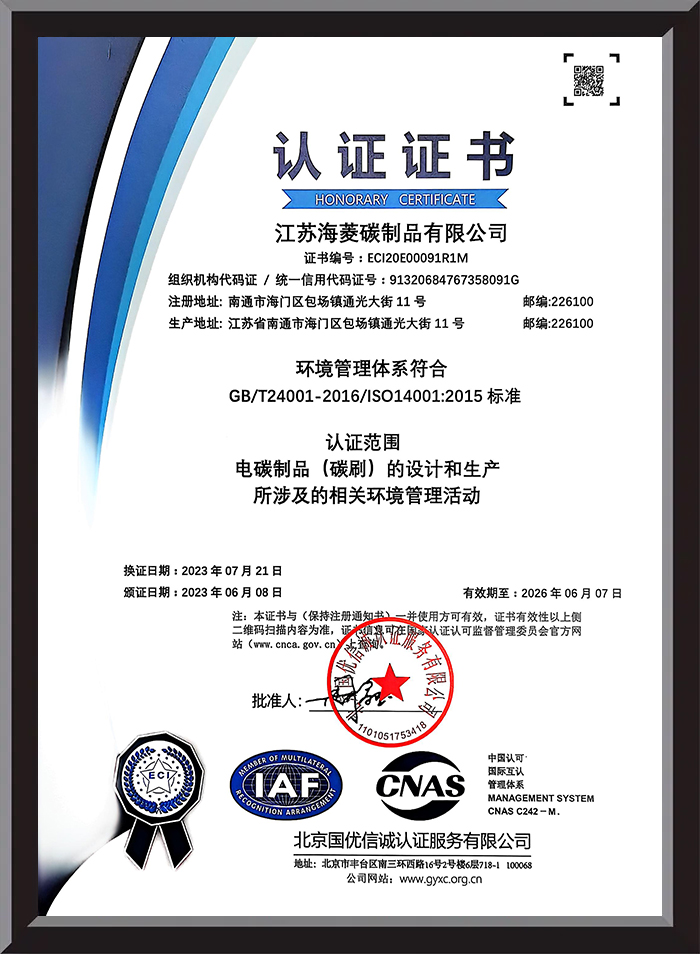
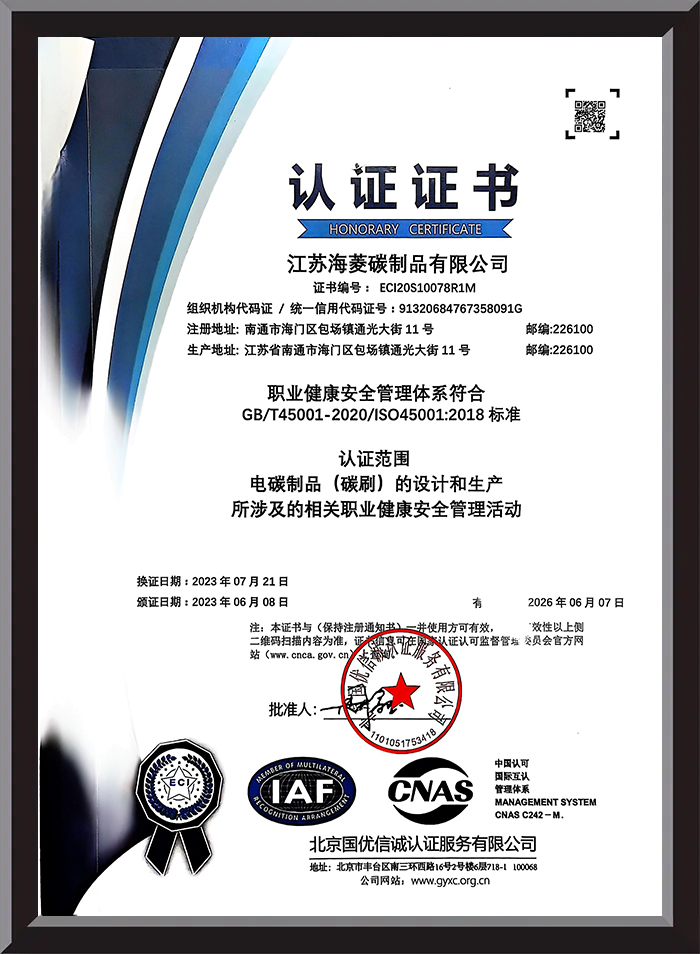
Moisture resistance is equally important for garden tools carbon brushes, as outdoor environments frequently involve humidity, rain, and occasional water contact. Carbon brushes used in these conditions require controlled porosity and resin content to reduce water absorption. Companies like Jiangsu Hailing Carbon Products Co., Ltd. incorporate material blending techniques that help improve moisture stability. The firm’s certifications, including ISO 14001 and ISO 45001, demonstrate its approach to environmental and occupational standards, which support the development of brushes that maintain performance in varied weather conditions. By ensuring that its products undergo consistent quality tests and following full-process quality management, the company aims to provide garden tools carbon brushes with dependable moisture resistance. These characteristics contribute to longer operational stability and reduced electrical fluctuations when garden tools are used in damp conditions.
Material Composition and Structure of Garden Tools Carbon Brushes
The dustproof and moisture-resistant characteristics of garden tools carbon brushes largely depend on the chosen raw materials and manufacturing techniques. Factors such as graphite type, copper content, hardness, and binder selection all influence the brush’s performance. Jiangsu Hailing Carbon Products Co., Ltd. leverages its high-tech enterprise qualification and continuous innovation strategy to refine these material combinations. Its carbon brushes are produced using a systematic approach that enhances uniformity across batches. Because garden tools require brushes that remain stable under changing outdoor conditions, manufacturers often use medium-hard graphite formulations to balance conductivity, mechanical strength, and environmental durability. The company’s long-term cooperation with domestic and international motor brands also contributes to optimizing brush structures that meet diverse field requirements across different garden tool categories.
| Material Feature |
Relevance to Dustproof Performance |
Relevance to Moisture Resistance |
| Graphite Density |
Higher density helps reduce dust penetration |
Improves resistance to water absorption |
| Binder Resin Content |
Supports structural integrity against debris friction |
Reduces moisture infiltration into pores |
| Copper Percentage |
Stabilizes friction behavior in dusty environments |
Maintains conductivity even under humid conditions |
Environmental Conditions Affecting Garden Tools Carbon Brushes
Garden tools are typically used in open-air environments where carbon brushes face continuous exposure to dust and moisture. The presence of soil dust can accelerate surface wear, while moisture can contribute to electrical instability if the brush material is not properly optimized. Jiangsu Hailing Carbon Products Co., Ltd., guided by its principle of “Integrity in Operation, Quality First,” integrates environmental stress considerations into its brush design and testing process. The company’s adoption of advanced ERP systems allows more comprehensive monitoring of variables such as hardness, resistivity, and moisture absorption rates across production batches. This helps ensure that the garden tools carbon brushes function consistently even in demanding usage scenarios. Through ongoing improvements in molding, pressing, and heat-treatment techniques, the company enhances the environmental adaptability of its brush products.
Industry Approaches to Enhancing Dustproof and Moisture-Resistant Features
Within the industry, several strategies are commonly applied to improve the dustproof and moisture-resistant performance of carbon brushes used in garden tools. These include surface treatments to reduce porosity, optimized machining to ensure tight dimensional tolerances, and coating technologies that enhance exterior durability. Jiangsu Hailing Carbon Products Co., Ltd. incorporates independent innovation into each stage of brush manufacturing to enhance performance characteristics. Its cooperation with well-known motor brands supports continuous updates in testing standards and product design. Additionally, the company’s recognition through awards and its trademark’s status as a “Nantong Famous Trademark” and “Jiangsu Famous Trademark” reflect its established role in product quality development. By practicing lean management and pursuing global competitiveness, the company helps advance the industry’s overall approach to producing garden tools carbon brushes with stable dustproof and moisture-resistant properties.
| Improvement Method |
Function |
| Reduced-Porosity Formulation |
Helps limit dust and moisture penetration |
| Precision Machining |
Improves fit with commutator, reducing debris ingress |
| Moisture-Control Additives |
Enhances behavior in humid outdoor conditions |
| Heat-Treatment Optimization |
Stabilizes material performance during prolonged tool use |
Compatibility of Garden Tools Carbon Brushes with Outdoor Power Systems
The performance of garden tools carbon brushes in outdoor power tools depends not only on dustproof and moisture-resistant characteristics but also on compatibility with the motor systems of trimmers, hedge cutters, blowers, and similar equipment. Jiangsu Hailing Carbon Products Co., Ltd., which collaborates with leading domestic and international motor brands, designs brushes to fit varied motor configurations. Brush size, spring pressure, and electrical conductivity must align with tool requirements to sustain smooth motor operation. When carbon brushes encounter dust or moisture, structural balance ensures stable commutation. Through standardized production, quality inspections, and an innovation-oriented strategy, the company contributes to maintaining the long-term reliability of garden tools equipped with its carbon brush solutions.
Do garden tools carbon brushes require higher hardness or density?
Hardness Requirements of Garden Tools Carbon Brushes
The hardness level of garden tools carbon brushes plays a significant role in determining how well they withstand the mechanical stress created during continuous outdoor operation. Garden tools such as trimmers, hedge cutters, chain saws, and blowers often operate at high rotational speeds, where the interaction between the brush and commutator becomes more demanding. A material with moderate hardness is typically preferred because it provides a balance between wear resistance and electrical contact stability. Manufacturers like Jiangsu Hailing Carbon Products Co., Ltd., operating under the long-standing principle of “Integrity in Operation, Quality First,” optimize hardness through controlled graphite selection, pressing pressure, and sintering parameters. These techniques ensure that garden tools carbon brushes maintain consistent wear behavior without causing accelerated commutator abrasion. Through updated production equipment and independent innovation, Hailing improves hardness uniformity across batches, which supports predictable performance in the field.
Density Characteristics and Their Influence on Garden Tools Carbon Brushes
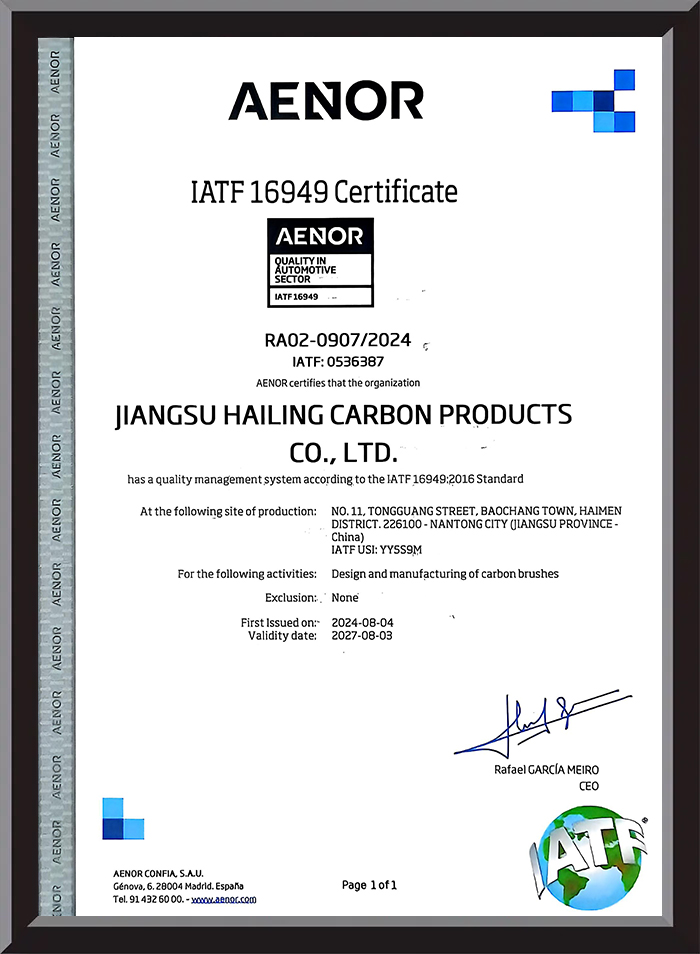
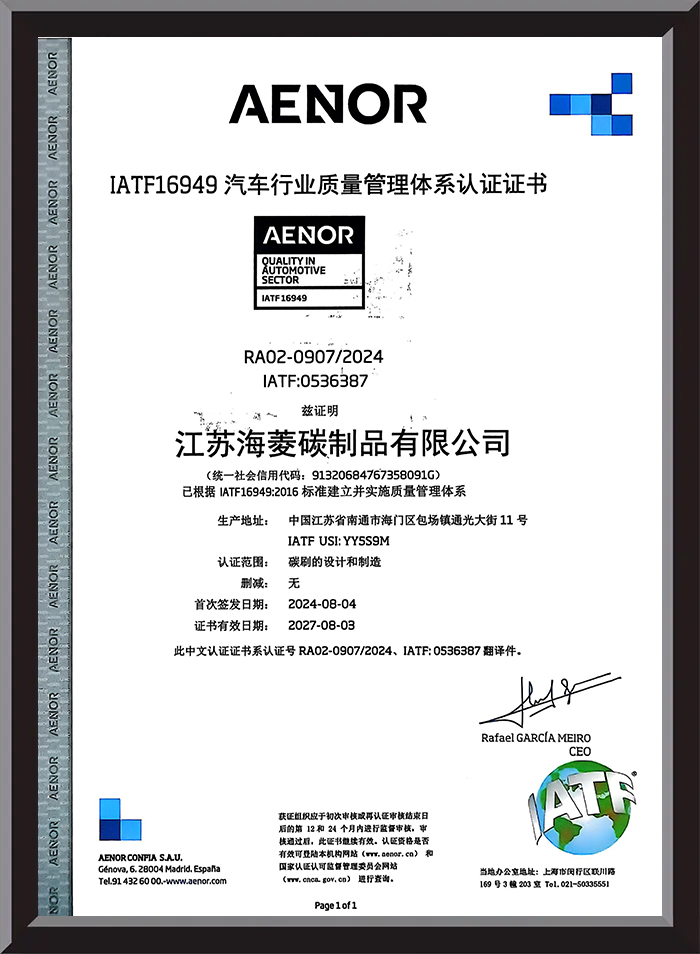
Density is another fundamental parameter influencing the performance of garden tools carbon brushes. A brush with a higher density generally exhibits lower porosity, which improves its resistance to particle accumulation and moisture infiltration—two common environmental factors encountered in gardening work. Jiangsu Hailing Carbon Products Co., Ltd., equipped with high-tech enterprise qualifications and certifications such as ISO 14001, ISO 45001, and IATF 16949, develops material formulas designed to maintain stable density levels. Proper density contributes to consistent resistivity and stable current flow inside motors, especially when the brush is exposed to soil dust or humidity. To ensure these characteristics, the company applies full-process quality control under ISO 9001 and uses an advanced ERP system to track raw materials, molding conditions, and sintering outcomes. These measures help create garden tools carbon brushes that maintain density-related durability under various outdoor working environments.
Balancing Hardness and Density for Outdoor Motor Applications
In the carbon brush industry, hardness and density are closely linked, and this relationship must be carefully managed for garden tool applications. A brush that is too hard may increase commutator wear, while one that is too soft may experience rapid consumption during heavy-duty trimming or cutting. Likewise, overly dense brushes may reduce lubrication between the brush and commutator, whereas insufficient density may lead to inconsistent electrical conductivity. Jiangsu Hailing Carbon Products Co., Ltd., which collaborates with top domestic and international motor brands and has earned multiple “Excellent Supplier” awards, integrates material engineering principles to optimize both properties simultaneously. Through consistent innovation and lean management practices, the company adjusts graphite types, binder ratios, and processing temperatures to achieve a suitable hardness-density combination that supports durable motor operation in garden tools.
| Parameter |
Function in Carbon Brushes |
Relevance to Garden Tools |
| Hardness |
Affects wear rate and commutator interaction |
Helps maintain balanced friction during high-speed trimming |
| Density |
Impacts conductivity and porosity |
Supports performance in dusty or humid outdoor environments |
| Graphite Composition |
Defines mechanical stability |
Improves lifecycle under varied garden tool loads |
Material Formulation Strategies for Garden Tools Carbon Brushes
Developing garden tools carbon brushes with suitable hardness and density requires precise control of raw material formulation. Factors such as graphite flake size, copper content, and resin binder ratios influence the final physical characteristics. Jiangsu Hailing Carbon Products Co., Ltd., recognized with the “Hailing” trademark as a Nantong Famous Trademark and Jiangsu Famous Trademark, employs blend optimization to produce consistent material batches. High-pressure molding reduces internal pore size, contributing to both higher density and improved moisture resistance. Meanwhile, controlled heat treatment ensures that hardness remains within a range that supports stable electrical commutation without causing excessive friction. These material strategies allow brushes to perform reliably even when exposed to gardening debris, temperature shifts, and long working hours.
Operational Durability in Outdoor Environments
Garden tools carbon brushes operate in environments where exposure to dust, vibration, humidity, and sudden load changes is common. The hardness and density of the brush material significantly influence how well it adapts to these conditions. Jiangsu Hailing Carbon Products Co., Ltd., with its strong tradition of independent innovation and ongoing process refinement, conducts performance evaluations such as wear rate measurements, electrical resistance tests, and environmental simulations. These tests help verify whether hardness levels support smooth commutation and whether density is sufficient to maintain structural stability under outdoor stress. By ensuring a predictable relationship between these properties, the company strengthens the reliability of brush-powered garden tools across residential and professional applications.
| Environmental Factor |
Impact on Brush Material |
Required Property Balance |
| Soil Dust |
Can accumulate in pores |
Higher density helps reduce dust lodging |
| Humidity |
May alter resistivity |
Controlled density reduces moisture absorption |
| High-Speed Operation |
Increases mechanical wear |
Moderate hardness supports consistent friction |
Industry Direction in Hardness and Density Optimization
Across the carbon brush manufacturing industry, the trend is toward achieving a balanced combination of hardness and density tailored to specific outdoor tools. Manufacturers increasingly rely on process automation, material analytics, and standardized testing to refine these parameters. Jiangsu Hailing Carbon Products Co., Ltd., supported by ongoing lean management practices and continuous equipment upgrades, contributes to this advancement by integrating real-time production monitoring and traceability. Its long-term cooperation with motor manufacturers provides insights into field performance, helping the company refine the hardness and density of garden tools carbon brushes to meet evolving equipment demands. Through consistent innovation and adherence to quality-focused systems, the company enhances the overall stability and endurance of brushes used in the garden tools sector.


 English
 中文简体
中文简体