What Specialized Material Grades and Compositional Properties Ensure Power Tools Carbon Brushes Withstand Extreme Intermittent Load Cycles?
Power tools, including drills, angle grinders, circular saws, and rotary hammers, are characterized by their extreme, intermittent operation. Their duty cycle demands high starting torque, rapid acceleration to thousands of revolutions per minute, high current peaks, and frequent thermal cycling. Power Tools Carbon Brushes are engineered to be the critical electrical link in these systems, specifically designed to handle these peak loads while ensuring component longevity, optimal tool function, and user safety.
The unique operational profile of these devices necessitates a sophisticated approach to material science. Original Bosch Tools Carbon Brushes Manufacturers must select material compositions that maintain low electrical resistance and high mechanical resilience under conditions that would quickly destroy standard carbon components.
Material Composition for Extreme Duty:
The brush material composition is the primary determinant of the brush’s ability to survive the repeated mechanical and thermal shocks of the power tool environment.
Resin-Bonded Electrographitic Grades: For high-speed tools requiring moderate current and superior mechanical stability, such as high-RPM drills and precision saws, specialized resin-bonded electrographitic grades are employed. These grades use high-purity electrographite combined with thermosetting resins under intense pressure and heat. The resin acts as a potent binder, significantly increasing the mechanical strength necessary to resist chipping and cracking during impact, heavy vibration, or sudden stops. This high strength ensures that the brush maintains its integrity throughout its service life. The intrinsic low electrical resistivity of the graphite particles efficiently manages the high commutation heat generated during rapid acceleration cycles. The selection of the resin itself is optimized for temperature stability, preventing the binder from degrading and causing premature brush softening or excessive dusting during prolonged use periods.
Metal Graphite for Grinders and High Current: High-power angle grinders and cutting tools demand maximum current transfer capacity and exceptional thermal dissipation. For these applications, metal graphite grades featuring a copper or copper-tin matrix are essential. The metal content dramatically boosts conductivity. The key engineering challenge is expertly balancing this metallic conductivity with the need for low friction and wear. The resulting material is a low-friction component that forms a stable patina layer quickly upon cold startup. In critical, surge-prone environments, trace element doping, such as the addition of micro-fine silver powder, is utilized to further enhance thermal conductivity and resistance to contact welding during high current surges that occur at startup or under severe mechanical strain. This silver content is crucial not just for high conductivity but also for effective arc suppression at the contact interface, minimizing the erosive effects of sparking during heavy load transitions. The metallic powders themselves are often subjected to a special coating process before blending to ensure better dispersion within the graphite matrix and prevent premature oxidation, thereby guaranteeing consistent electrical properties throughout the brush's volume.
Patina Formation and Contamination Management: Power tool operating environments are inherently dusty, contaminated with fine particles of concrete, wood, or metal debris. The brush material must possess a subtle 'self-cleaning' capability. The tailored composition promotes the rapid, controlled formation of the thin, protective patina layer, or commutation film, on the commutator surface. This stable film acts as a mechanical and electrical barrier, preventing abrasive dust particles from embedding and initiating destructive wear, which would otherwise lead to rapid 'pitting' or 'grooving' of the motor commutator. Pre-conditioning or run-in treatments are sometimes applied to the contact face of the brush to accelerate initial film formation, ensuring optimal performance from the very first use of the tool.
Vibration and Acoustic Dampening: The mechanical interaction between the brush and commutator is a substantial source of operational noise and high-frequency vibration. Specialized graphite grades are selected for their inherent viscoelastic and dampening properties. These materials absorb some of the kinetic energy generated during contact, reducing acoustic emissions and improving the overall user experience, a subtle yet crucial factor in the design of Original Bosch Tools Carbon Brushes. The density and porosity of the final carbon block are precisely tuned to maximize this dampening effect without sacrificing current density capability.
How Do Mechanical Design Features Like Auto-Stop and Precision Pigtail Construction Guarantee Safety and Reliability in Power Tools?
Tool safety, operator protection, and consistent operational uptime are non-negotiable requirements in the power tool sector. The mechanical integrity and assembly precision of the carbon brush, particularly its integrated safety mechanisms, are paramount. This rigorous standard requires unwavering consistency from the China Carbon Brushes For BOSCH Manufacturers.
Mechanical Design for Enhanced Safety:
The physical design of the brush assembly is often just as complex as its chemical composition, incorporating essential safety features and mechanical resilience.
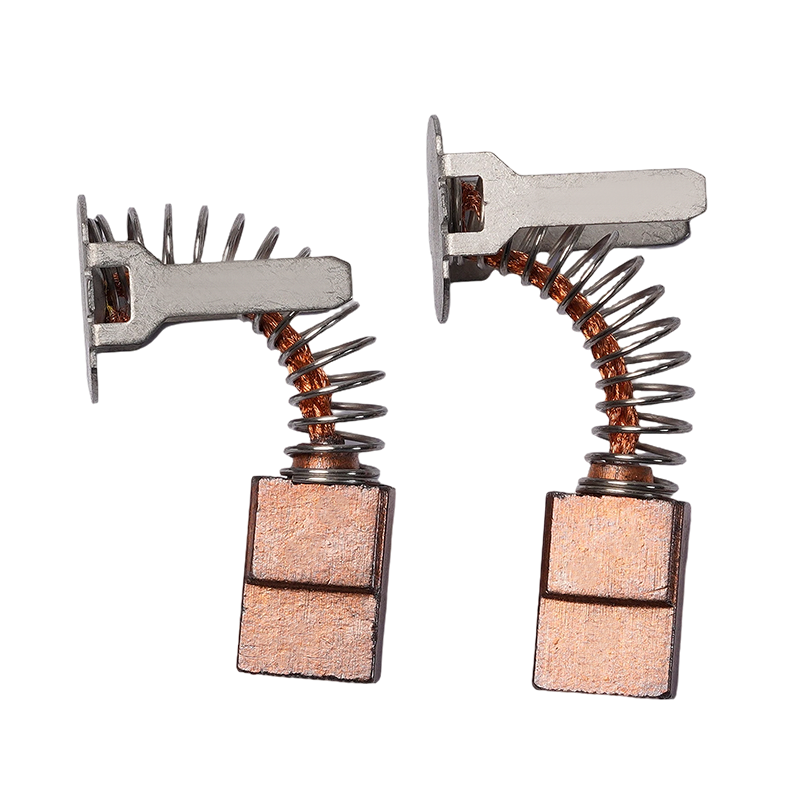
Integrated Auto-Stop Mechanism: A defining and essential safety feature in many professional Power Tools Carbon Brushes is the auto-stop mechanism. This typically involves a small, flexible metallic sensor securely embedded within the carbon brush block. As the brush wears down to a critical predefined wear limit, the metallic tab loses contact with the commutator or armature surface. This action instantly breaks the electrical circuit, stopping the motor. This preventative measure is vital: it prevents the metallic components of the brush holder or spring from making contact with the high-speed rotating motor parts, which would cause severe sparking, catastrophic motor failure, and significant safety risks. The precision of this trigger point is maintained via micron-level dimensional control during the final brush assembly process. The metallic sensor material is often a specialized alloy chosen for its fatigue resistance and stable electrical properties, ensuring it does not fail prematurely before the carbon material is consumed.
Pigtail Resilience and Low-Resistance Welding: The flexible copper shunt, or pigtail connection, is arguably the most thermally and mechanically stressed part of the assembly. It must endure constant flexing, mechanical vibration, and rapid thermal cycling without failure. The connection method between the pigtail and the carbon block is therefore highly critical. High-quality manufacturers utilize specialized techniques such as ultrasonic welding or high-temperature induction brazing to create a virtually zero-resistance bond. This ensures that the connection resists failure under high vibration and rapid heating/cooling cycles, maintaining reliable conductivity. The pigtail’s insulation quality, gauge, and precise length must perfectly fit the specific tool housing geometry, accommodating the full range of brush travel without obstruction, kinking, or premature fatigue.
Dimensional Tolerance and Casing Fitment: For optimal performance, the brush must slide freely yet fit precisely within the brush holder to maintain continuous, constant contact pressure. Tolerances for the brush body size are meticulously controlled, often held to less than 50 micrometers. This extreme level of precision is necessary to prevent 'sticking' the single most common mechanical cause of brush failure, erratic sparking, and commutator damage in power tools. The geometry of the brush, including the parallelism of the faces and the flatness of the running surface, must be verified using sophisticated digital and mechanical measurement systems before assembly. The constant force spring materials are chosen not only for their consistent pressure application but also for their high fatigue limits; they undergo accelerated cycling tests to guarantee they maintain their intended force curve after thousands of operational cycles, which corresponds to the full service life of the brush. Manufacturers often provide detailed force-displacement curves that specify the precise pressure applied at every millimeter of brush wear, assuring customers of stable commutation performance right up to the auto-stop trigger point.
Manufacturing Consistency and Quality Assurance:
The ability of a specialized Power Tools Carbon Brushes Factory to produce thousands of perfectly consistent brushes for demanding original equipment markets is fundamental to the industrial supply chain. This consistency relies on integrated quality management and specialized high-volume manufacturing capacity.
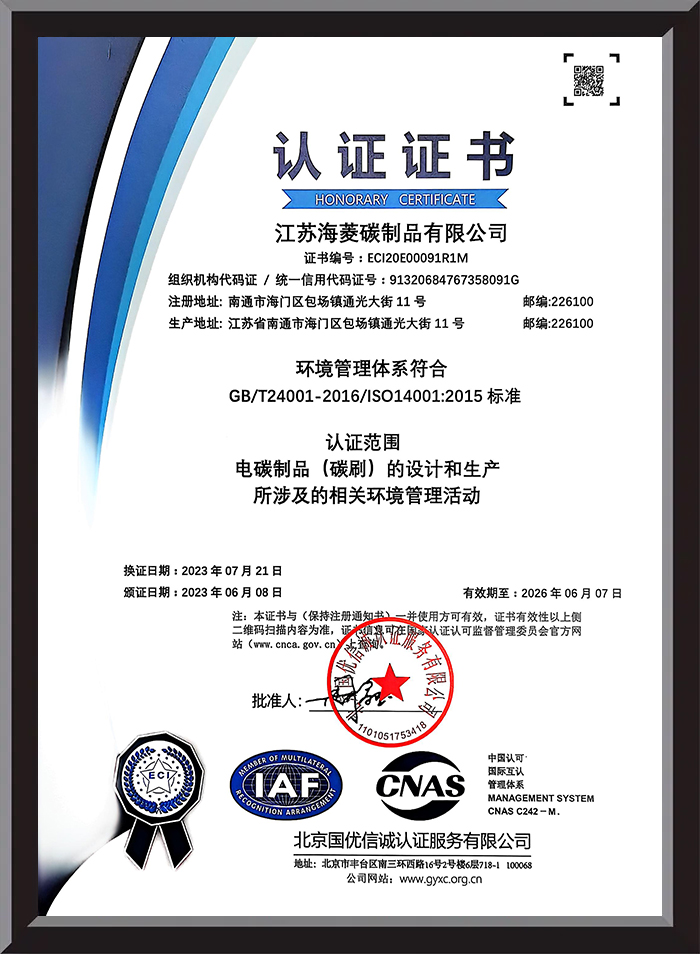
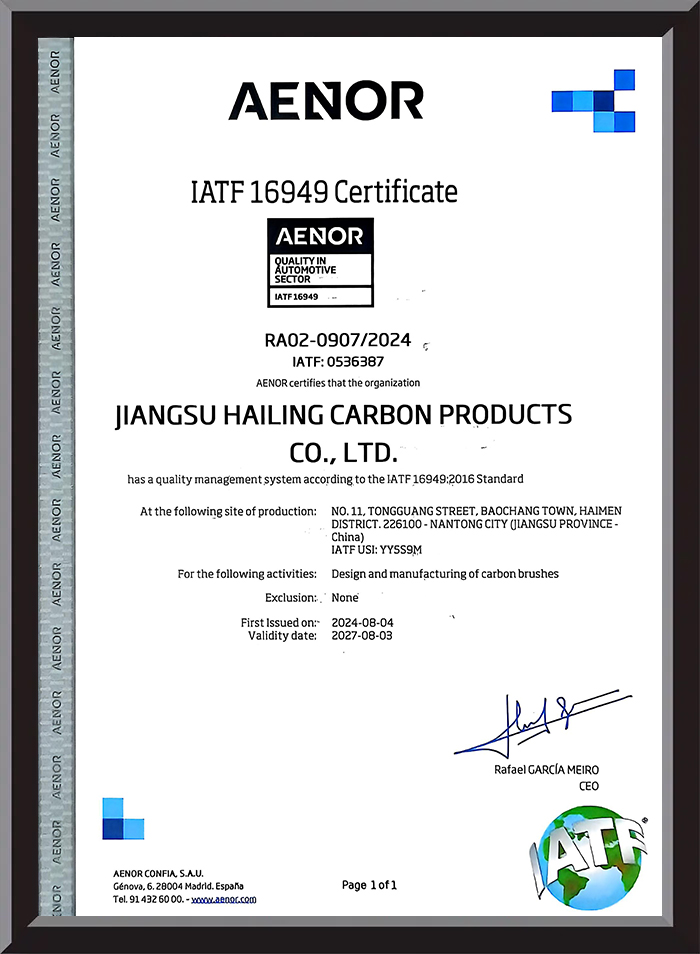
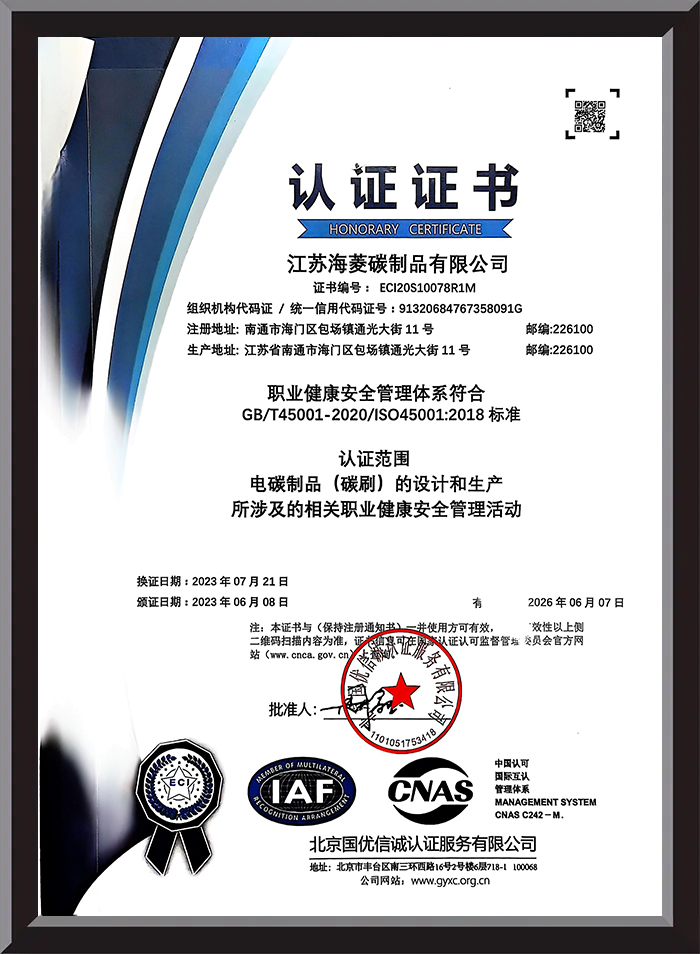
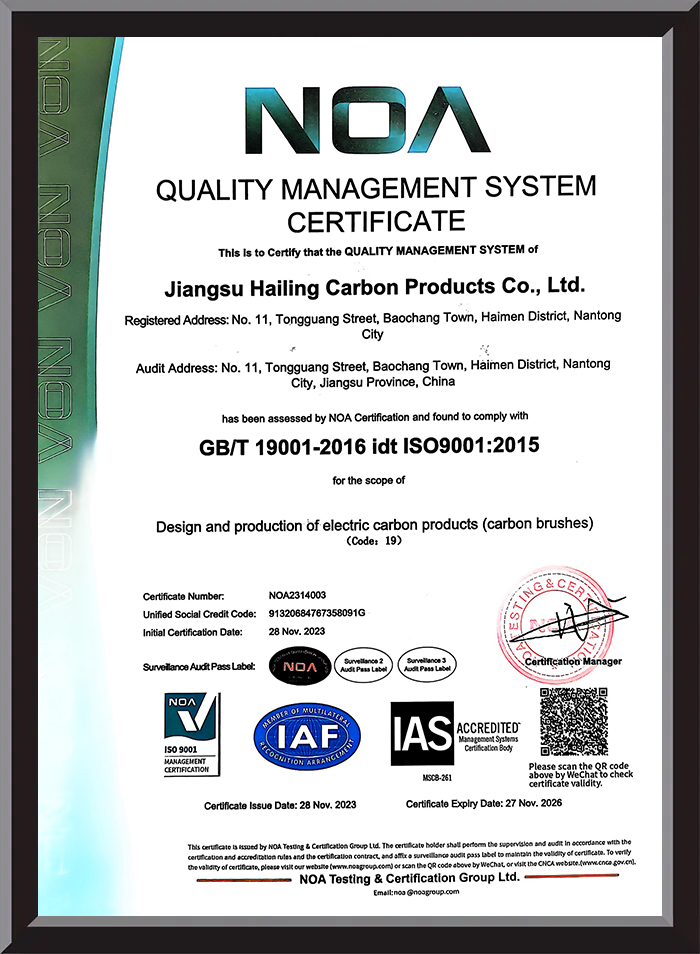
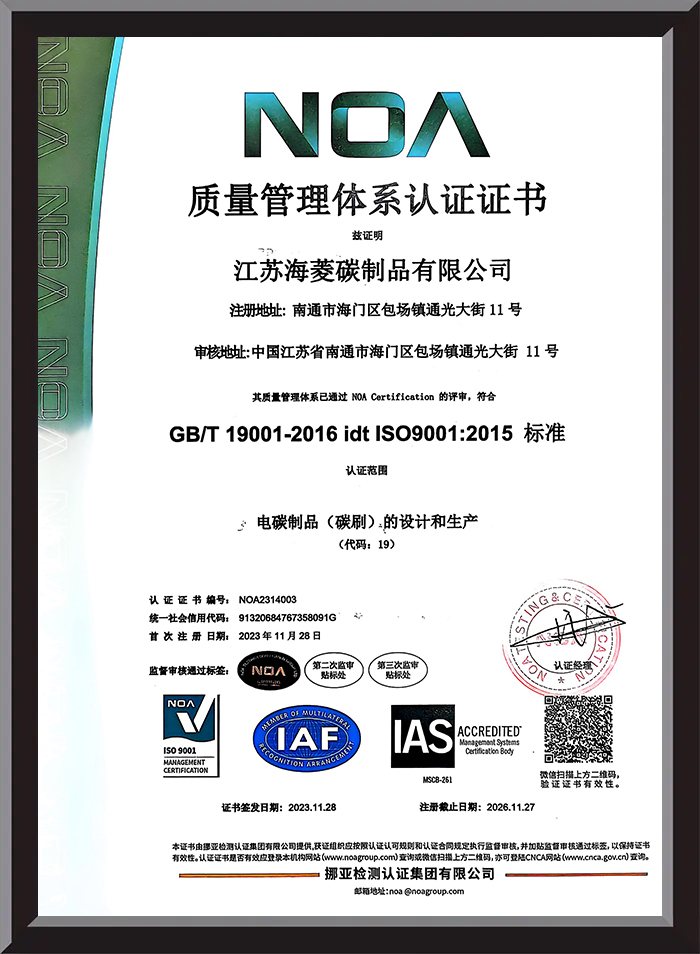
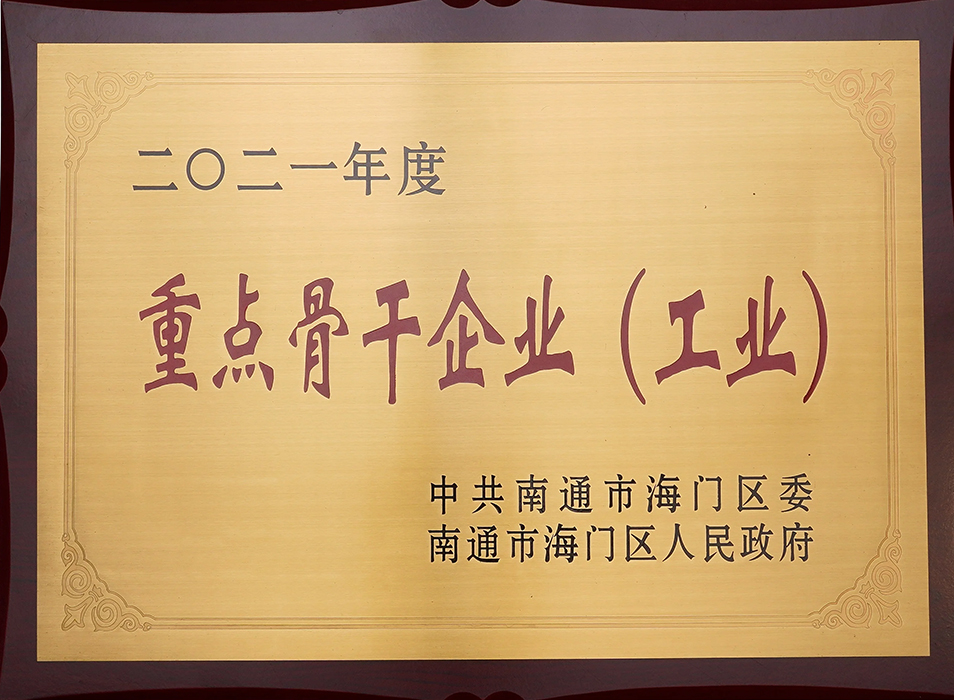
A major manufacturer in this specialized field, Jiangsu Hailing Carbon Products Co., Ltd., adheres rigorously to the philosophy of "Integrity in Operation, Quality First" and "Brand Building, Independent Innovation." The manufacturer leverages advanced production techniques and integrated quality management systems, including an advanced ERP system, to ensure product performance. The utilization of this advanced ERP system in production allows for stringent, real-time management of batch consistency. This digital platform ensures end-to-end traceability, from validating the precise raw material mixture ratio to documenting the exact sintering temperature curve for every batch. This technical safeguard is crucial for producing high-reliability products at scale and maintaining component uniformity across large tool lineups. This systemic focus on consistent quality has enabled them to achieve high-volume output while partnering with motor brands. Their continuous effort to strengthen technical performance ensures their products, including Power Tools Carbon Brushes, remain highly competitive in the global market.
Performance Validation and Predictive Testing:
The long-lasting durability promise is validated through a defined set of tests that simulate the abusive conditions of professional power tool use.
Thermal Shock Testing: This test simulates the rapid heating and cooling cycles of intermittent tool use. Brushes are repeatedly cycled from ambient temperature to their maximum rated operating temperature under peak current. This verifies the stability of the material bond and the pigtail connection, ensuring the brush material does not experience micro-fractures or softening that compromise long-lasting durability.
Commutation Quality Under Load: Brushes are tested on motor simulators under both high starting torque and peak operating speed. High-speed video analysis and electrical monitoring equipment are used to rigorously assess the degree of sparking and arcing during transient load events. High commutation quality is directly linked to reducing electrical noise, preventing premature motor damage, and ensuring smooth operation. Testing for power tool brushes often requires dedicated, high-speed, dynamic test benches that can precisely replicate the operational current curve of a specific tool, such as simulating the current spike when a circular saw starts cutting or when a rotary hammer engages impact mode. These specialized dyno rigs allow engineers to measure the instantaneous voltage drop and current waveforms, providing highly granular data on commutation quality for precise performance tuning.
Accelerated Wear Modeling: Durability prediction is achieved by running the brushes under elevated current and spring pressure to condense thousands of operational hours into short, controllable test periods. This data is used to develop predictive models that accurately forecast the brush's service interval, helping end-users and maintenance teams plan parts inventory and replacement schedules efficiently. Beyond the brush itself, the final brush assembly often undergoes full compatibility testing within the actual tool housing to verify factors like proper spring seating, vibration resonance, and thermal profile within the confined space. This step ensures that the brush meets not only material standards but also functional integration requirements under real operating conditions.
The expertise in complex material blending and precision mechanical assembly, coupled with a focus on safety-critical features like auto-stop, ensures that these specialized Grinder Carbon Brushes For BOSCH Suppliers deliver components that meet the demanding reliability standards of the global power tools industry.


 English
 中文简体
中文简体