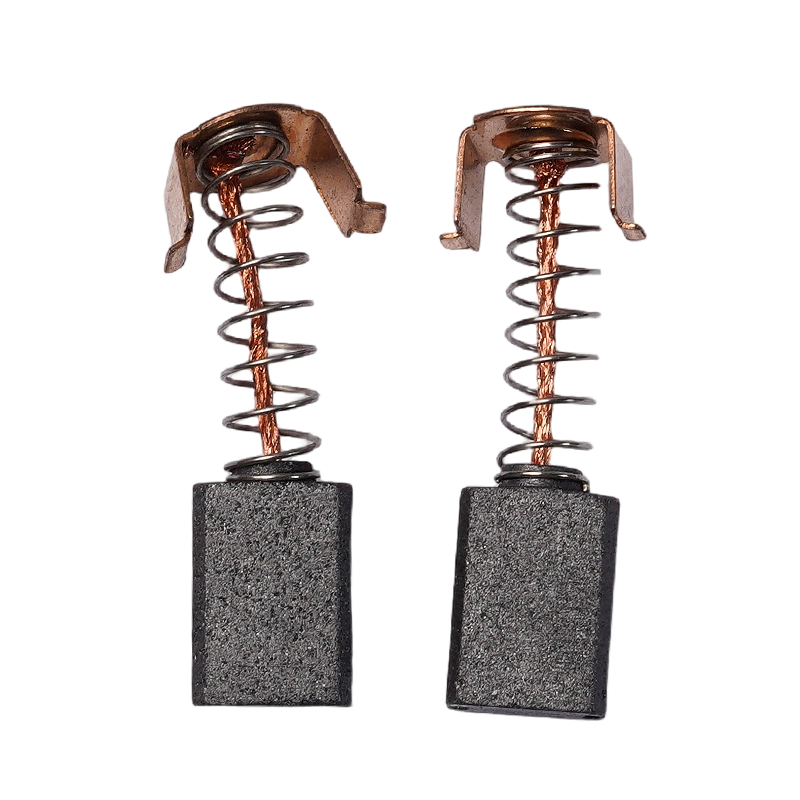
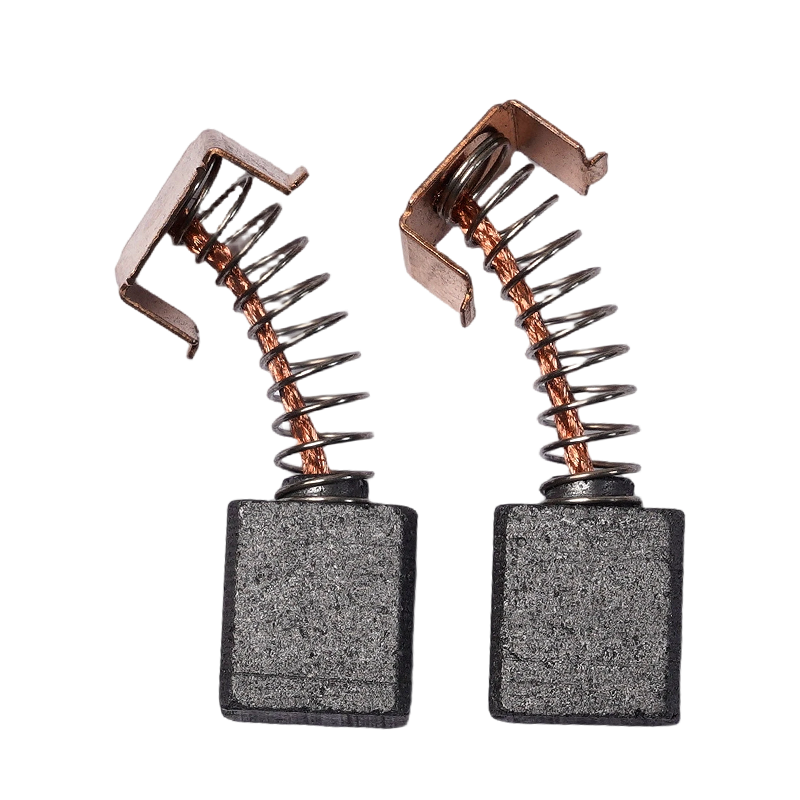
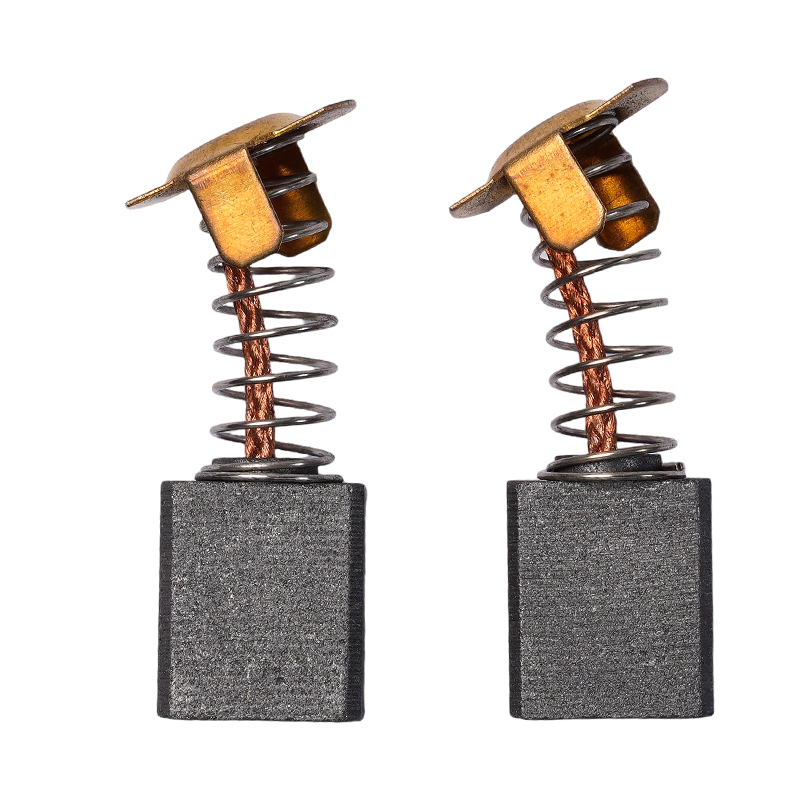
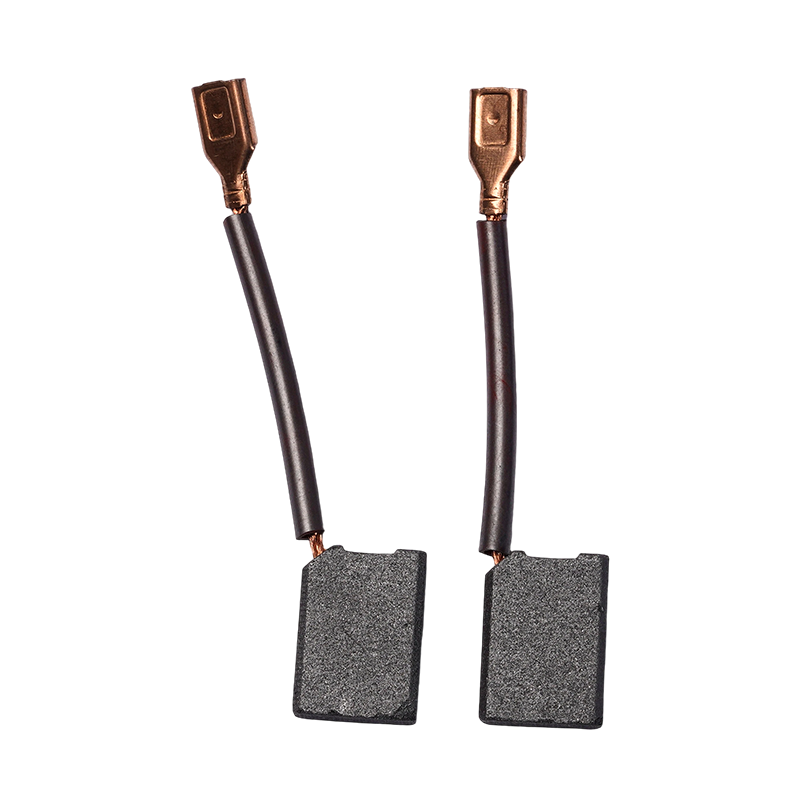
What Specific Material Properties and Powder Metallurgy Techniques Are Required for Power Tools Carbon Brushes For CROWN to Manage High Current Peaks and Thermal Stress?
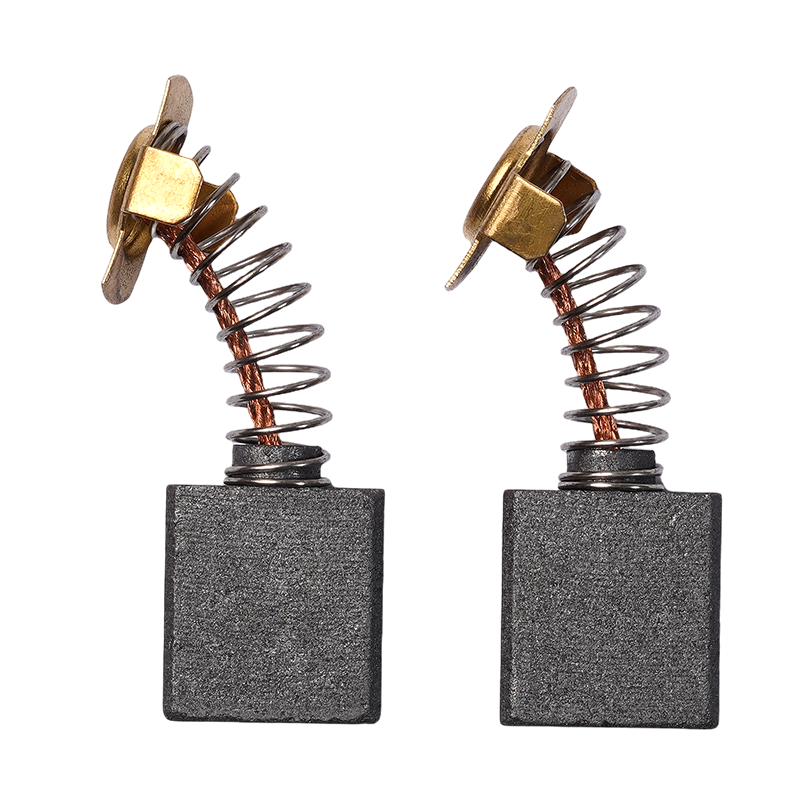
Power tools utilized in demanding consumer and professional environments, such as those manufactured by CROWN, operate under aggressive intermittent duty cycles. These applications require high starting torque, rapid acceleration, and frequent thermal cycling. Power Tools Carbon Brushes are the critical components that must maintain electrical contact and structural integrity despite these extreme peak loads. The success of Power Tools Carbon Brushes For CROWN lies in specialized material compositions engineered for maximum performance and user safety.
Material Selection for Consistency and Value in High-Volume Manufacturing:
The ideal material matrix for these applications must effectively manage high current densities and high peripheral speeds while retaining mechanical durability in dusty and vibrational job site conditions. This consistency is a primary focus for Wholesale Power Tools Carbon Brushes For CROWN Manufacturers operating at scale.
Graphitic and Carbon-Graphite Grades for Precision Tools: For high-speed, lower-power tools like standard drills, sanders, and compact routers, high-purity graphitic and carbon-graphite grades are the standard choice. These materials undergo a precise, rigorous thermal treatment, often called graphitization, which refines the carbon structure into a highly crystalline form. This structure provides inherent lubricity, a key property for minimizing friction, reducing operational heat buildup, and ensuring smooth operation across the tool’s functional lifespan. The consistency of the raw material and the uniformity of this graphitization process are paramount. A stable, well-ordered carbon structure resists premature breakdown and ensures a predictable wear profile, crucial for inventory management and reliable service life planning.
Powder Metallurgy for High Current Capacity: Applications like large angle grinders, cut-off saws, and impact drivers generate substantial current spikes at startup and under heavy load. To meet these demands, specialized metal graphite grades are synthesized using advanced powder metallurgy. Finely ground metallic powders, typically copper or, for elevated performance, silver-containing alloys, are uniformly blended with the graphite base material. This composite mixture is subjected to high-pressure compaction and subsequent high-temperature sintering. The resulting dense, homogeneous structure integrates the superior electrical conductivity of the metal with the lubricating properties of the graphite. The metallic component is essential for reliable conductivity and efficient thermal transfer, rapidly drawing heat away from the contact face and supporting high intermittent electrical loads. Careful control over particle size, blending ratio, and sintering time is vital to ensure the metal lattice enhances conductivity without disrupting the self-lubricating function of the graphite base, preserving both electrical efficiency and mechanical wear resistance.
Resin-Bonded Stabilization for Mechanical Resilience: For tools subjected to severe mechanical shock and vibration, such as reciprocating saws and jigsaws, the brush material needs enhanced mechanical integrity. This is achieved by incorporating specialized thermosetting resins into the graphite matrix. These binders significantly increase the material’s modulus of elasticity and fracture toughness, effectively preventing premature chipping, cracking, or structural degradation under mechanical stress. The resins are chosen for their thermal stability, ensuring they do not degrade or soften when the tool is operated continuously under load, thereby maintaining consistent electrical contact pressure. Precise management of the resin content is necessary to ensure it enhances mechanical properties while the brush remains fully conductive and maintains a predictable, gentle wear rate, which is a key measure of long-lasting durability.
Commutation Film Management and Climate Adaptability: The effective performance of the brush is fundamentally dependent on the stable, controlled formation of a micron-thin protective film, known as the patina, on the copper commutator. Brushes manufactured as Power Tools Carbon Brushes For CROWN are specifically formulated to rapidly establish and maintain this layer. The film acts as a vital boundary lubricant and a low-resistance electrical interface, significantly mitigating arcing and reducing abrasive wear. The brush composition often includes trace inorganic elements that actively manage the chemical environment at the contact surface. This is particularly important for promoting film stability when the tool is operated under varying ambient conditions, such as high humidity or temperature fluctuations commonly encountered on construction sites. This engineering for wide climatic resilience ensures consistent friction coefficient and wear rates regardless of the operating environment.
Dimensional Precision for Seamless Aftermarket Integration:
Many power tool carbon brushes are sold as high-volume aftermarket or replacement parts. Ensuring seamless installation and immediate performance requires maintaining exceptionally tight dimensional tolerances throughout the manufacturing process.
Micron-Level Tolerance Control: The physical dimensions of the carbon block are controlled with extremely high precision. This accuracy is essential to ensure the brush moves absolutely smoothly within the motor’s brush holder channel, preventing any possibility of sticking or jamming. A brush that fails to slide freely cannot maintain correct contact pressure, leading to dangerous, destructive sparking, rapid damage to the commutator, and subsequent premature motor failure. Advanced digital metrology and coordinate measuring machines (CMM) are employed to validate the precise parallelism, squareness, and overall geometry of the brush body, ensuring repeatable fitment across extensive production batches.
Geometrical Accuracy and Pre-Conditioned Profiles: The parallelism of the contact face and the squareness of the sides are critical for achieving full, uniform contact between the brush and the commutator surface. Precision grinding and lapping techniques are used to achieve this geometry, which significantly reduces the initial run-in time required after installation. Many brush faces are manufactured with pre-conditioned features, such as specific contours, subtle beveled edges, or chamfers. These profiles are designed to optimize the initial contact patch and accelerate the uniform development of the protective commutation film, guaranteeing smooth operation from the very first use.
How Do Precision Mechanical Engineering, Integrated Safety Features, and Advanced Quality Systems Guarantee the Durability and Reliable Conductivity of CROWN Power Tool Systems?
The long-term value, intrinsic safety, and operational uptime of power tools are directly dependent on the mechanical assembly and the supply chain’s ability to deliver absolute consistency. For high-volume tools, every component of the brush assembly must integrate perfectly and perform reliably under stress.
Assembly Engineering for Mechanical Durability:
The non-carbon elements of the brush assembly are engineered with the same rigor as the carbon block itself to ensure robust performance.
Pigtail Attachment Integrity and Fatigue Resistance: The copper shunt, or pigtail, is required to conduct the motor’s full current load without excessive heat generation and must structurally resist the mechanical fatigue caused by motor vibration and continuous brush movement. Leading manufacturers utilize high-temperature induction brazing or specialized ultrasonic welding techniques to create a permanent, gas-tight, and extremely low-resistance bond between the pigtail and the carbon block. This strong metallurgical connection maintains reliable conductivity and resists degradation under rapid thermal cycling inherent to intermittent tool use. The pigtail itself is typically constructed from high-strand, high-flexibility copper cable, specifically chosen for its superior resistance to bending fatigue. Its design ensures it can withstand constant movement as the brush wears down, supporting the desired long-lasting durability of the component.
Integrated Auto-Stop Mechanism for Safety: A critical and increasingly standard safety feature in professional-grade brushes is the integrated auto-stop mechanism. This feature incorporates a small, flexible metallic sensor or contact securely embedded within the carbon brush body. When the brush wears down to its predetermined minimum safe operating length, the metallic sensor loses contact with the commutator surface. This action immediately and deliberately breaks the motor's electrical circuit, stopping the tool instantaneously. This preventative design is vital as it prevents the metallic components of the spring or brush holder from contacting the high-speed rotating commutator, which is a major safety hazard and a common cause of irreparable motor damage. This feature ensures the brush serves as a clear, proactive maintenance and safety indicator, supporting the overall long-lasting durability of the tool system.
Optimized Spring Systems and Consistent Pressure: The spring mechanism is essential for delivering and maintaining uniform contact pressure across the entire service life of the brush. Manufacturers utilize high-fatigue spring steel alloys that are designed to ensure the spring force remains highly consistent as the brush material is consumed. This constant, regulated pressure is crucial for preventing brush bounce, chattering, and erratic sparking, which are primary causes of accelerated brush and commutator wear, thereby guaranteeing reliable motor performance. The spring's force curve is meticulously calibrated to achieve the optimal balance: minimizing friction to reduce heat while maintaining sufficient pressure to ensure stable current transfer across the full working stroke and varying load conditions.
Manufacturing Consistency and Quality Leadership:
The ability to deliver highly consistent and reliable Power Tools Carbon Brushes For CROWN components at a massive scale is rooted in sophisticated manufacturing processes and integrated quality control systems.
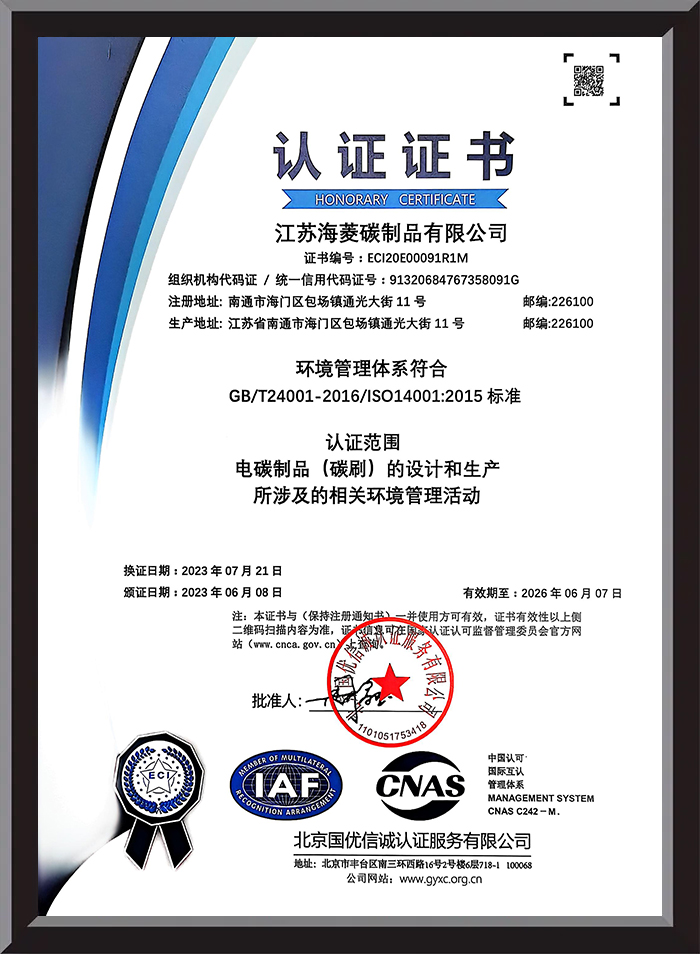
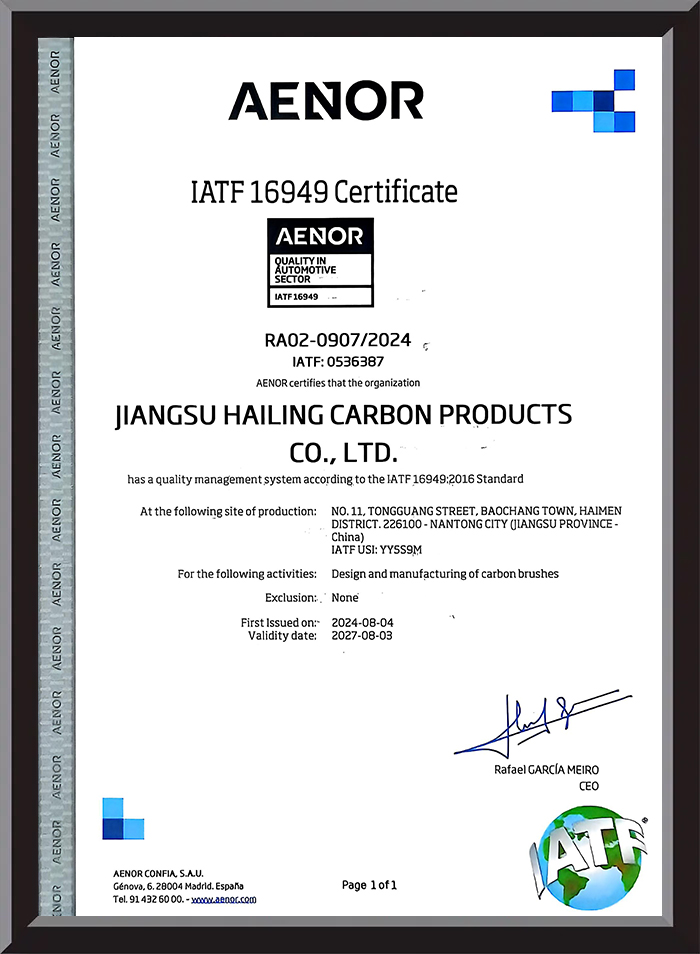
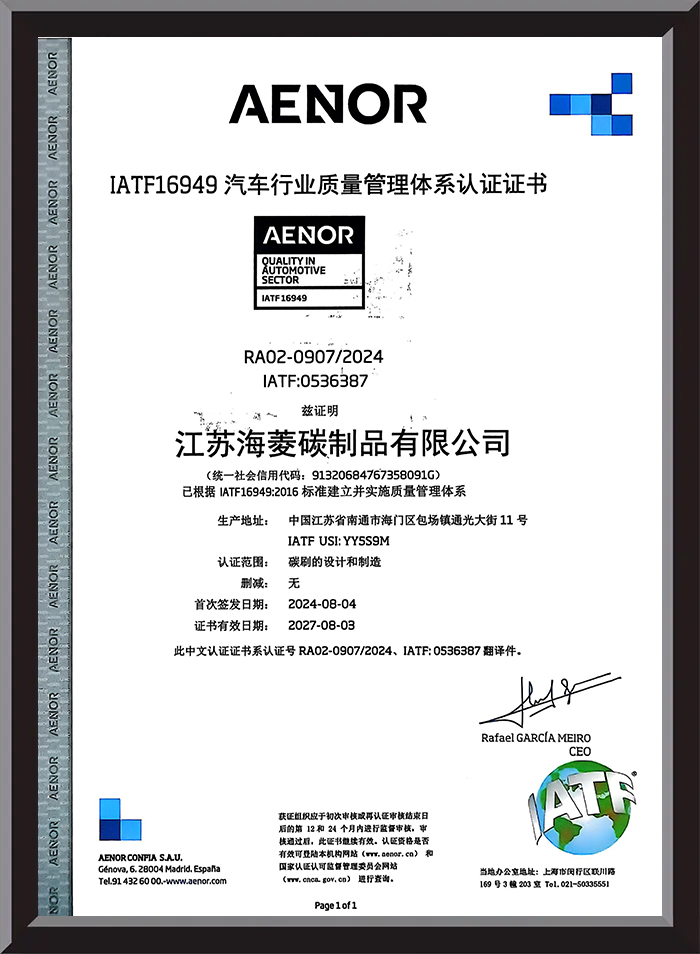
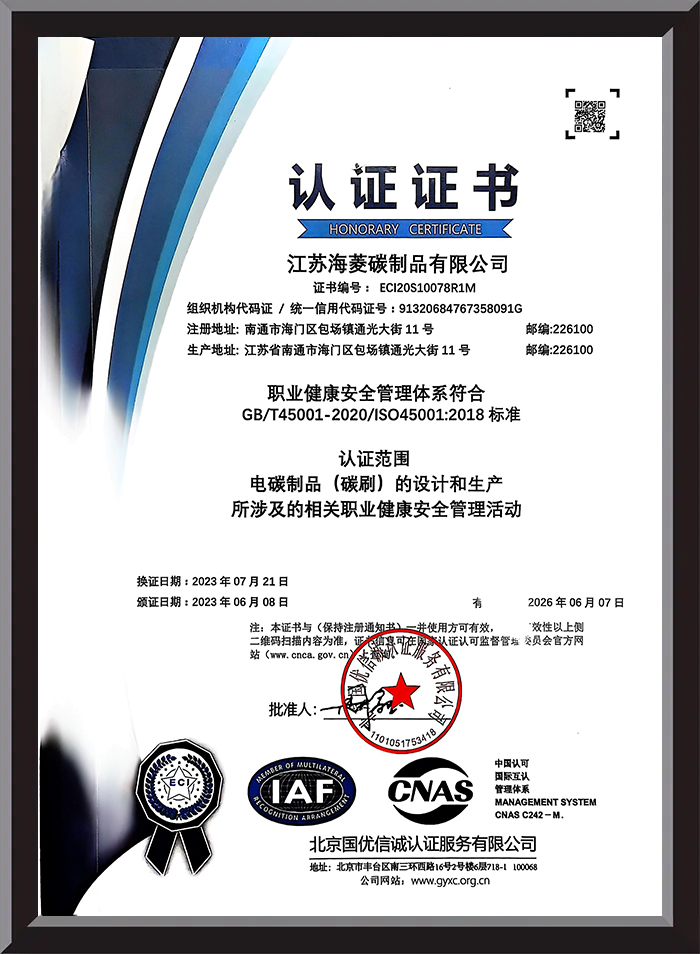
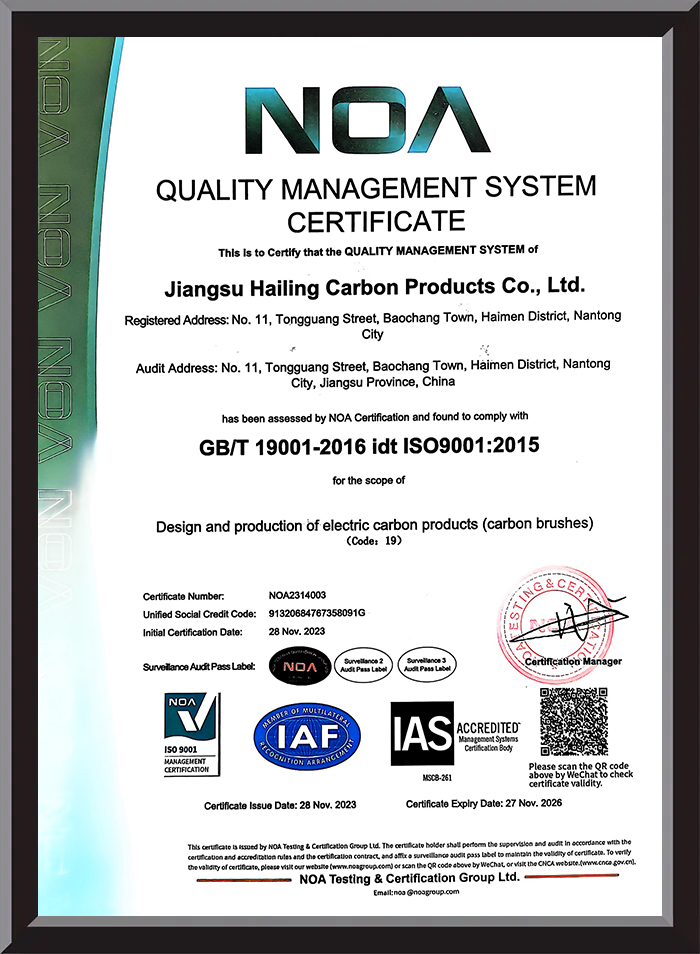
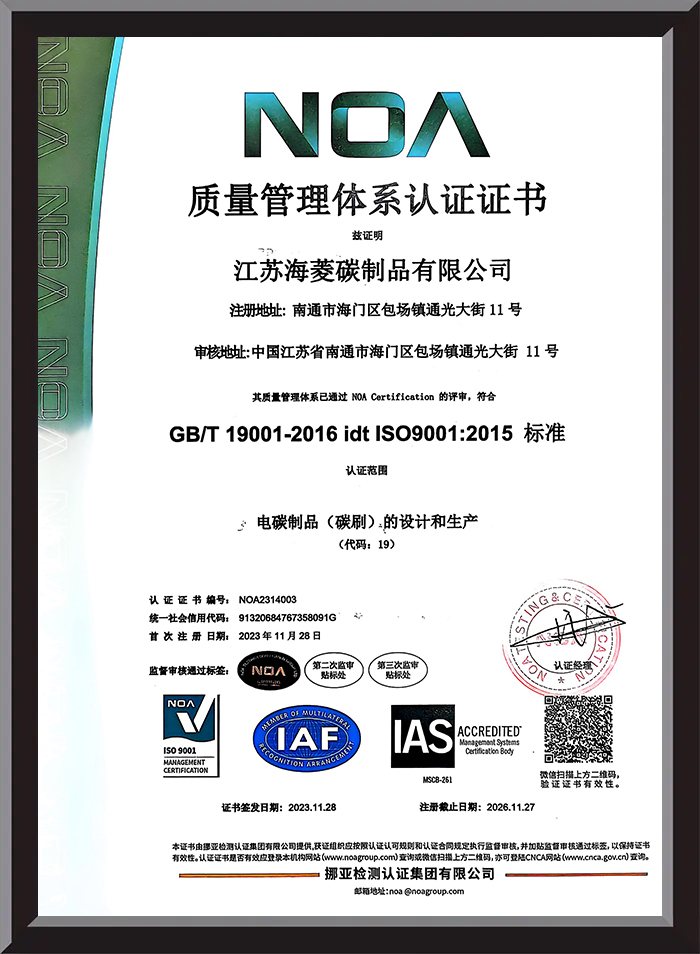
A prominent manufacturer in this specialized field, Jiangsu Hailing Carbon Products Co., Ltd., demonstrates leadership in this area. As a key China Carbon Brushes For CROWN Manufacturers and Grinder Carbon Brushes For CROWN Suppliers, the company adheres rigorously to the philosophy of "Integrity in Operation, Quality First" and is guided by "Brand Building, Independent Innovation." The manufacturer leverages advanced production techniques and integrated quality management systems to ensure exceptional product performance. The utilization of a sophisticated ERP system in production is fundamental to their operations, allowing for stringent, real-time management of batch consistency. This digital platform ensures end-to-end traceability, from validating the precise raw material mixture ratio to documenting the exact sintering temperature curve for every batch. This systemic control is crucial for producing high-reliability products at scale and maintaining component uniformity across large tool lineups. This systemic focus on consistent quality has allowed them to achieve high-volume output while partnering with top domestic and international motor brands, ensuring their competitiveness in the global market. Furthermore, adherence to comprehensive international standards, including IATF 16949, signifies an elevated commitment to the most demanding quality benchmarks for component supply chain management, ensuring rigorous risk reduction and stringent change control.
Performance Validation for Long-Term Reliability:
Rigorous and repeatable testing protocols are mandatory to ensure that the brushes can withstand the combined mechanical, thermal, and electrical stresses of real-world power tool usage.
Dynamic High-Speed Wear and Life Testing: Brushes are mounted on customized test rigs that precisely simulate the maximum rotational speed, peak current, and operating voltage of the intended CROWN application. Detailed data collected, including accurate wear rate measurement and continuous monitoring of contact voltage stability, is critical for accurately predicting the service life of the brush. This predictive capability allows distributors and end-users to manage parts inventory and replacement schedules effectively, guaranteeing reliable motor performance and minimizing tool downtime.
Commutation Stability and Noise Monitoring: Specialized electrical analysis equipment, including digital oscilloscopes, is used to monitor the quality of current transfer during rapid acceleration and deceleration cycles. The degree of electrical noise, specifically radio frequency interference (RFI), and the severity of arcing are meticulously measured and quantified. This rigorous testing ensures the brush material delivers exceptionally stable commutation quality across the tool’s full operating range, which is directly correlated with maintaining smooth operation and long-term motor health. Low electrical noise is also essential for compliance with international electromagnetic compatibility standards.
Vibration Analysis and Mechanical Resilience: Brushes are subjected to controlled, high-frequency vibration testing that accurately simulates the mechanical loads experienced by rotary and impact tools. This test is crucial for validating the mechanical integrity of the carbon block and, critically, the fatigue resistance of the pigtail attachment and the integrity of the metallic bonds. This process ensures that the complete assembly will not fail prematurely due to physical stress, contributing significantly to the component's long-lasting durability.
Product Application Profile and Performance Attributes for CROWN Power Tools:
This reference table outlines the specific material and mechanical characteristics engineered into carbon brushes for various CROWN power tool applications.
|
Tool Application Profile
|
Primary Material Grade Type
|
Commutation Stability Focus
|
Durability and Safety Attribute
|
|
High-Speed Rotary Drills
|
Pure Electrographite
|
Optimized for minimized acoustic and electrical noise at high RPM
|
Designed for Low Friction and Smooth Operation across the full wear life
|
|
Heavy-Duty Angle Grinders
|
High Copper Metal-Graphite Composite
|
Superior Intermittent Current Handling and rapid Heat Dissipation
|
Features High Thermal Stability and Reliable Conductivity under sustained heavy load
|
|
Reciprocating Saws and Jigsaws
|
Reinforced Resin-Bonded Carbon
|
Superior Resistance to Mechanical Shock and high-frequency Tool Vibration
|
Possesses Enhanced Structural Strength for Long-lasting Durability in intensive, cyclical use
|
|
Impact Drivers and Compact Tools
|
Medium Metal-Graphite Composite
|
Maximum Power Transfer Efficiency during High Torque Startup Cycles
|
Engineered for High Resistance to Arcing and Wear for consistent reliable motor performance
|
|
Precision Cut-Off Saws
|
Specialized Electrographite with Low Ash Content
|
Excellent Film Formation under clean and enclosed operating conditions
|
Provides extended service life and minimal commutator abrasion for smooth operation
|
This comprehensive engineering approach, combining advanced material science with precision mechanical design and integrated quality control, ensures that these specialized Wholesale Power Tools Carbon Brushes For CROWN Manufacturers deliver components that meet the highest global standards for safety, performance, and operational durability in the power tool market.


 English
 中文简体
中文简体