Nov 09, 2026
Few things end a working morning faster than a mower that fires once and dies, or a trimmer that refuses to start at all. Out comes the spark plug, and there it is again: black, wet, or coated in a pale grey crust. That is fouling, and although it looks like nothing more than a dirty little part, it is almost always a message from somewhere else in the engine.
After many years of supplying carbon components to motor and equipment builders, we have learned to treat every darkened part as evidence rather than as the problem itself. Here is how we read a fouled plug, what usually causes it, and what genuinely stops it from coming back.
A spark plug has a narrow job: accept high voltage from the ignition coil, hold it until the voltage is high enough to jump the gap, and ignite the air-fuel mixture at the right instant. Fouling interferes with that job in two distinct ways.
First, deposits that collect on the insulator nose become slightly conductive once they are hot. Instead of building to a sharp peak, the voltage bleeds away toward earth along the deposit, so the spark arrives weak, late, or not at all. Second, the deposits can physically bridge the gap, or glow hot enough to ignite the mixture early. Both paths lead to the same complaints at the user's end: difficult starting, misfire, and a stubborn loss of power.
A healthy plug tells a simple story. The insulator should be light tan or grey-brown, the electrodes clean, and the edges still reasonably sharp. Anything else deserves a second look, because a fouled plug is a symptom long before it becomes a failure.
Before reaching for a wrench, study the business end of the plug in good light. The colour and texture of the deposit point to a short list of causes, and the difference between dry soot and wet oil matters enormously.
| Deposit type | What you see | Typical cause | First step |
|---|---|---|---|
| Dry carbon | Matte, sooty black coating | Rich mixture, clogged air filter, weak spark, long idling | Clean or replace, then check air filter and carburetion |
| Wet fuel | Glossy black, strong fuel smell | Flooding, stuck choke, leaking needle valve | Fix fuel delivery before running again |
| Oil fouling | Oily and wet to the touch | Worn rings, valve guides or seals, overfilled sump | Compression and leak-down test |
| Ash deposits | Pale grey or white crust | Oil or fuel additives burning in the chamber | Review oil consumption and fuel choice |
| Glazing | Shiny yellow-brown insulator | Overheating, wrong heat range | Confirm the specified plug grade |
| Metallic specks | Tiny bright flecks on the nose | Leaded fuel or octane boosters | Return to the fuel the engine was built for |
One glance at this table explains why simply scrubbing the plug and refitting it so often fails. The deposit is the receipt, not the purchase.
A mixture that is richer than it should be leaves carbon behind on every combustion cycle. A dirty air filter, a choke that never fully opens, a carburettor adjusted by ear rather than by spec, or a leaking float needle will all produce a dry, sooty plug within a few hours of running.
Spark plugs are graded by how quickly they shed heat. Fit a plug that runs too cold for the engine and deposits never burn off; fit one that runs too hot and you risk glazing and pre-ignition. The manufacturer's specified plug number is not a suggestion.
Worn leads, corroded caps, or a coil that is past its best will fail to fire a fouled plug cleanly, and the partial burn adds yet more carbon. This is a self-reinforcing loop: weak spark creates deposits, and deposits demand more voltage than a weak system can supply.
Worn piston rings, hardened valve stem seals, or a crankcase that has been overfilled all push oil past the normal sealing surfaces. The result is the wet, oily fouling that no amount of cleaning will fix for long.
An engine that never reaches working temperature cannot burn deposits off the insulator. Equipment that is started, moved twenty metres, and shut down again will foul plugs far sooner than the handbook predicts.
Too much oil in the fuel, or oil of the wrong specification, is one of the most common causes of fouling on chainsaws, trimmers, and older mowers. Measure rather than estimate.
None of these is unique to fouling, but together with a dark plug they form a convincing case.
Light, dry fouling on a plug that is otherwise young can often be cleaned and returned to service. Replace the plug instead when the electrodes are rounded, the insulator is cracked or glazed, or the same plug has fouled twice. A plug is a cheap part; the diagnosis behind it is the valuable one.
Spark plug fouling and carbon brush wear belong to the same family of problems. Both involve a carbon component doing electrical work in a hot, dirty environment, and both fail gradually in ways that are easy to misread.
In an electric motor, the brushed contact wears and releases fine graphite dust that settles on the commutator and around the brush boxes. Left alone, that dust behaves much like soot on an insulator: it creates stray paths, raises resistance, and turns a smooth-running machine into one that sparks, surges, and runs hot. The machines that most often arrive in the same workshop as a fouled plug are garden tools, and their electric counterparts depend on exactly the same maintenance discipline.
 Carbon Brushes for Garden Power EquipmentDurable carbon brushes for trimmers, hedge cutters, chain saws, and blowers, designed to maintain reliable electrical contact and motor efficiency in dusty outdoor conditions.View Product →
The parallel holds under the bonnet as well. Wiper motors, condenser fan motors, and other small automotive motors live with heat, vibration, and carbon dust for years, and their brushes wear quietly until performance drops. Recognising that pattern early is what separates routine servicing from unexpected downtime.
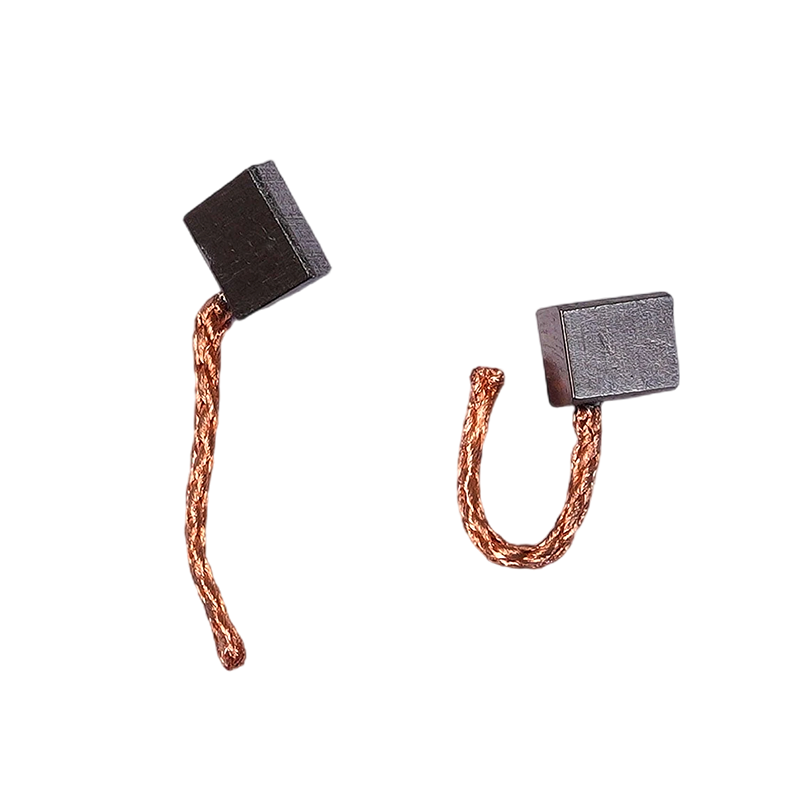 Carbon Brushes for Automotive Wiper and Fan MotorsCommon automotive motor carbon brushes for wiper, fan, and condenser applications, available with or without brush holders to support stable contact and longer motor life.View Product →
Whether you are reading a plug or inspecting a brush, the method is identical: look at the wear surface, ask what the deposit is telling you, and correct the cause rather than the symptom. Our own brush production has been built around that habit for more than two decades.
Spark plugs foul because something upstream is out of balance: mixture, heat range, ignition strength, or oil control. Clean the plug, by all means, but treat the deposit as a note from the engine and answer it properly. Do that, and the plug will stay a pale, healthy tan for the whole season.
If you would like to read more about spotting wear before it becomes a failure, our guide on how to tell when carbon brushes need replacing follows the same logic, and you can explore our precision carbon brush manufacturing work for the motor side of the story.

Phone:
+86-183 6280 9971
+86-513 8277 2222
Email:
 Custom Motor Carbon Brushes Manufacturers


 English
 中文简体