Nov 12, 2026
Slip rings look almost too simple: a smooth conductive ring turning with a shaft, and a carbon block pressing against it. Yet that small contact patch carries the current that makes the machine work. We have built carbon brushes for more than two decades, and the same questions come up again and again. Why does the brush not short the ring? How does current cross a moving gap? Why does brush grade matter so much? This guide answers those questions in practical terms, without turning the topic into a textbook.
A slip ring is a conductive ring mounted on a rotating shaft and insulated from it. The outer face of the ring is a smooth track. A stationary brush, held in a brush holder and pressed by a spring, rides on that track. The ring turns; the brush stays still. That is the basic arrangement that allows current to pass between a stationary circuit and a rotating circuit without a fixed wire connection.
Many machines use more than one ring on the same shaft. Separate rings can carry phases, control power, or signal circuits. You will find slip ring assemblies in synchronous generators, wound-rotor induction motors, wind turbine generators, rotary tables, cable reels, radar equipment, and various packaging or handling machines. In every case, the job is continuous current transfer, not current reversal.
That last point matters. A slip ring is not a commutator. A commutator is segmented, and its brushes experience deliberate switching as the segments pass. A slip ring is continuous, so its brushes should see a stable contact track. The two parts look similar from a distance, but they ask different things of the brush grade, the spring pressure, and the maintenance team.
Current enters the brush through its shunt or terminal, passes through the carbon body, crosses the brush-to-ring interface, and enters the ring. From there it travels along the ring and into the rotor circuit. The return path is usually another brush and ring, or the machine frame, depending on the design. The brush is not just a conductor. It is a sacrificial contact that wears while protecting the ring surface.
The interface is not a perfect metal-to-metal joint. In a healthy assembly, the brush face and ring carry a thin graphite film, and current passes through many tiny contact points. That film is useful. Too little film and the brush runs dry, causing friction, dust, and ring wear. Too much film and contact resistance rises, which brings heat and voltage drop. A good slip ring brush helps hold that balance. If you want a broader refresher on contact principles, our article on how carbon brushes work covers the fundamentals outside slip ring assemblies as well.
Carbon and graphite work well for slip ring service because they are self-lubricating, stable at elevated temperatures, and relatively gentle on the ring. They can be tailored with resins, graphite content, and metal powders to meet different current densities, surface speeds, and ring materials. A metal-graphite grade may suit a low-voltage, high-current application, while an electrographitic grade may be a better fit for higher surface speeds. The right choice depends on the whole operating envelope, not just one number on a data sheet.
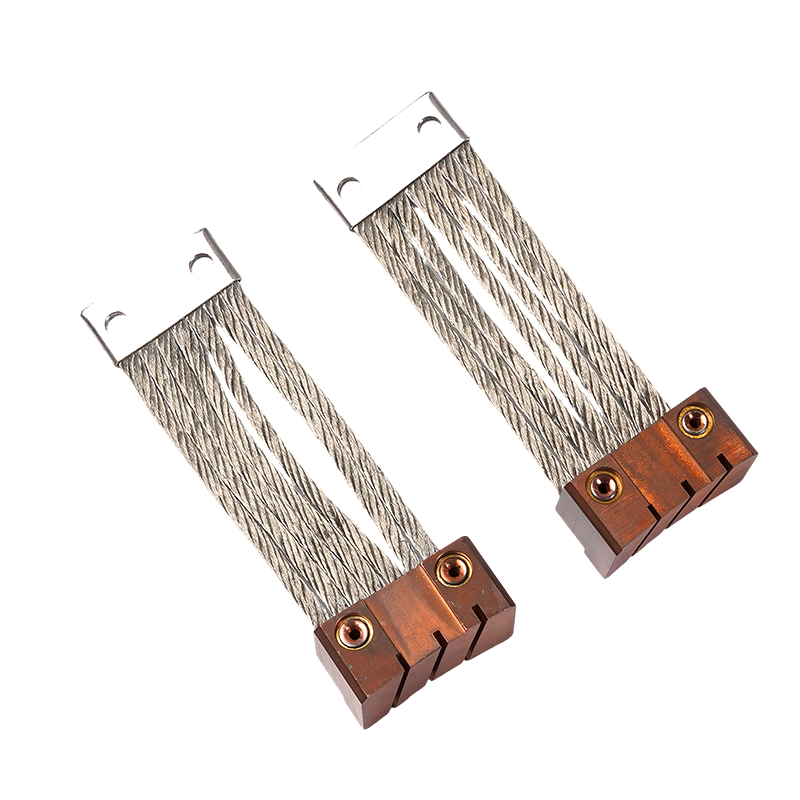 Wind Turbine Carbon Brushes for Generators and Slip RingsOffers material grades for generator, pitch-control slip-ring, and grounding duties, helping match brush choice to current, speed, climate, and wear conditions.View Product →
For wind turbine slip rings and similar high-availability equipment, we build grades that balance film formation with long wear life. The goal is not the softest brush or the hardest brush. It is a brush that keeps a stable contact film, holds its shape in the holder, and wears in a predictable way between inspections. That is also why a brush that works well on a commutator may not be the best choice on a slip ring. The electrical duty and the film behavior are different.
Spring pressure is a compromise. Too little pressure and the brush can bounce, arc, or leave a high-resistance track. Too much pressure and friction rises, the brush runs hot, and the ring wears faster. The brush must also move freely in its holder. A tight holder can hold the brush off the ring when the machine expands, while a loose holder can cause chatter and uneven wear.
Bedding is the other half of good contact. A new brush has a flat or slightly curved face, and it needs to match the ring radius. During run-in, the brush should seat gradually, with a light load where possible. If the brush is forced into service at full current before it beds, the contact area stays small, and local heating can damage both the brush and the ring. A properly bedded brush leaves a smooth, even track instead of a narrow stripe.
Humidity, oil mist, dust, and cleaning chemicals all affect the film. Dry air can make film formation difficult. Oil contamination can produce a gummy track and high resistance. Abrasive dust can cut through the film and wear the ring. When something changes in the environment, it is worth checking the brush track before blaming the brush grade.
The table below summarizes the practical differences that matter when you are choosing a brush or diagnosing wear.
| Feature | Slip ring | Commutator |
|---|---|---|
| Contact pattern | Continuous ring track | Segmented bars with gaps |
| Current reversal | No deliberate commutation | Current switched as the rotor turns |
| Typical machines | Generators, wound-rotor motors, wind turbines, rotary equipment | DC motors, universal motors, starters |
| Brush wear pattern | Usually smooth, film-dependent | Affected by bar edges and commutation |
| Maintenance focus | Film balance, ring runout, spring pressure | Bar-to-bar condition, brush bounce, sparking |
In practice, slip ring brushes are often quieter electrically than commutator brushes, but they still need the correct grade and pressure. A slip ring that sparks is not simply doing its normal job. It is usually telling you that bedding, pressure, contamination, or ring condition needs attention.
Most failures announce themselves before the machine stops. These are the signs we see most often:
It is tempting to replace the brush and move on. That is fine when the brush is simply worn out. But if the new brush shows the same symptom within a short time, the cause is probably in the holder, the ring, the spring, or the operating environment.
Inspect at planned intervals, not only when performance drops. Measure brush length, check spring force, and look at ring runout and surface condition. Replace brushes before the shunt becomes taut or the brush wears to its limit mark. If wear is uneven across a set, replace the set rather than mixing old and new brushes on the same ring.
Keep the brush holder clean and confirm that each brush moves freely. Remove carbon dust with a vacuum rather than compressed air, which can drive dust into bearings and windings. Check ventilation paths and look for oil or water ingress. After replacement, bed the brushes to the ring, run at reduced load where the process allows, and then confirm that a stable film has formed. Record the baseline so the next inspection has something to compare against.
For critical equipment such as wind turbine generators, the cost of a planned brush inspection is small compared with an unplanned outage. A little attention to spring pressure, ring finish, and film condition goes a long way.
Slip rings and brushes work because a stationary carbon block maintains controlled contact with a rotating ring. The ring carries current to the rotor, the brush delivers current to the ring, and the thin graphite film between them keeps the contact stable. Success depends on the right brush grade, the right spring pressure, good bedding, and a maintenance routine that respects the film.
If you are selecting a brush for a slip ring application, start with the operating conditions: current, surface speed, ring material, ambient humidity, and duty cycle. Those details matter more than a generic recommendation. That is the approach we take when working with customers, and it is the reason a small contact patch deserves careful attention.

Phone:
+86-183 6280 9971
+86-513 8277 2222
Email:
 Custom Motor Carbon Brushes Manufacturers


 English
 中文简体