Nov 16, 2026
Carbon brushes rarely fail without warning. They usually leave clues first: a motor that starts more slowly, sparks a little more, or sounds rougher than it did last month. As a brush manufacturer, we have learned that the real skill is not guessing—it is checking the simple things in the right order.
Short answer: a worn brush usually shows at least one of four things—a change in performance, excessive sparking, visible wear under the inspection cover, or a hot, noisy motor. You do not always need to remove the motor; start with behavior, then inspect.
Before opening anything, pay attention to how the machine behaves. A tool that once cut easily may begin to hesitate under load. A vacuum may lose suction. A treadmill belt may slip or start with a jerk. These symptoms are not unique to brushes—a failing switch, capacitor, bearing, or winding can feel similar—but they are reason enough to check.
Excessive sparking is the classic clue. A small amount at the commutator can be normal, especially at startup or under heavy load. A bright shower of sparks, a buzzing sound, or sparking that continues after the motor settles is more worrying. Judge sparks against how the machine ran when healthy, not against a video of a different motor.
Also watch for intermittent running, a hot carbon smell, squealing, or a motor that needs a tap to start. On a two-brush motor, one worn brush can make the machine run unevenly or slow under load. If symptoms change after cleaning the holder, dust or a sticking brush may be involved.
Visual inspection is decisive, but only when it is done safely. Unplug the machine, remove the battery, or lock out the power supply. Let the motor cool. Then follow the manufacturer's access route; some tools have a brush cap, some appliances have an inspection cover, and some industrial motors require a trained technician.
Once you can see the brush, check length, face condition, freedom of movement, and spring pressure. A new brush has a clean carbon block and a spring that presses it snugly against the commutator. A worn brush may be shorter, chipped, cracked, glazed, or covered in heavy carbon dust. Many small motors include a wear line or minimum length mark. As a rough field guide, about 6 mm (1/4 inch) or less usually means replacement, but the manufacturer's limit always takes priority.
Do not judge by length alone. A long brush stuck in its holder behaves like a worn brush. Lift it gently to see whether it slides freely. Check the shunt—the flexible wire or braided connection—for fraying, loose terminals, or a broken joint. A dark, smooth commutator film is often normal; deep scoring, burned spots, or heavy buildup points to a larger repair.
| What you notice | What it often suggests | What to check | Next step |
|---|---|---|---|
| Extra sparking at the commutator | Worn or poorly seated brush, weak spring, dirty commutator | Brush length, spring pressure, brush face | Replace a matched set or service the commutator |
| Motor weak or stalls under load | Reduced brush contact or high resistance | Wear, shunt, terminal, holder fit | Test the circuit and replace the worn brush |
| Intermittent start or sudden stops | Brush sticking, cracked brush, loose shunt | Free movement in the holder; shunt condition | Clean the holder or replace the brush |
| Hot smell, squeal, heavy dust | Friction, excess pressure, misalignment | Spring tension and brush fit | Correct the cause; replace if worn |
| Uneven brush lengths | Uneven current sharing, holder or spring issue | Both brushes, both holders, contact surfaces | Replace as a pair and investigate if it repeats |
If the brush is short, cracked, or stuck, stop running the machine until it can be replaced or serviced. Continuing to use a worn brush can damage the commutator and turn a simple consumable job into a motor repair.
In drills, grinders, saws, and garden tools, worn brushes often announce themselves with extra sparking, a drop in torque, or a smell of hot carbon. The brushes are usually behind caps on either side of the motor. If the tool is several years old and has seen heavy use, a short brush is a likely culprit. For common universal motor shapes, start from a known replacement series such as our universal power-tool range, then match dimensions and grade to the original.
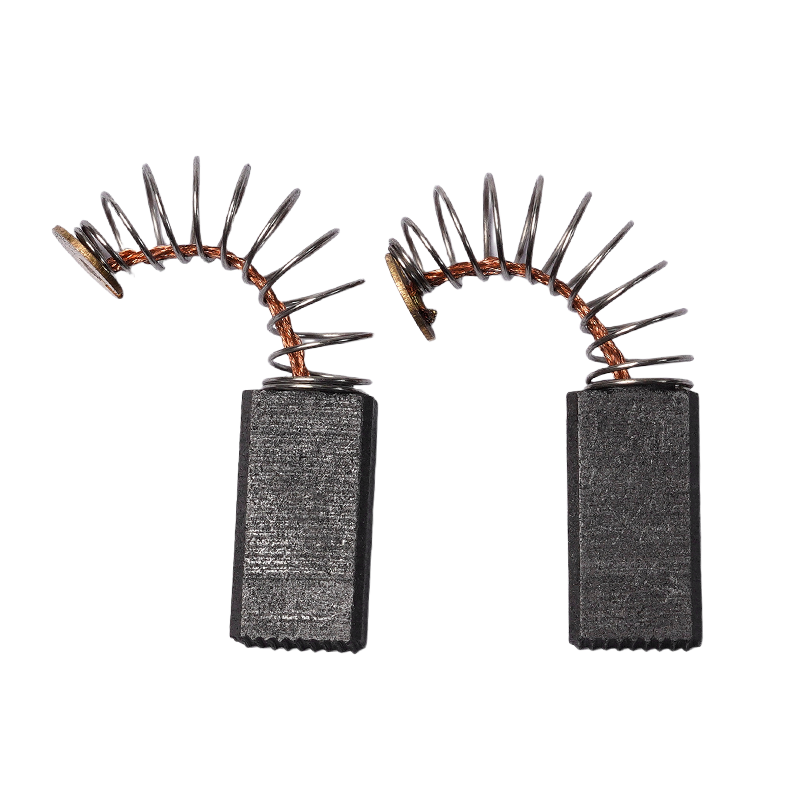 Universal Power Tool Carbon BrushesBrowse universal carbon brushes for common power-tool motor shapes, then match dimensions and grade to the original before ordering.View Product →
Washing machines, vacuum cleaners, treadmills, and kitchen appliances often use smaller DC or universal motors. The clues may be less dramatic: the drum struggles to start, suction drops, the treadmill belt hesitates under load, or the appliance needs a push to begin. Small brushes can wear quickly, and access varies by model. Our DC motor and micro motor range covers many compact sizes, but the old brush should still be measured before ordering.
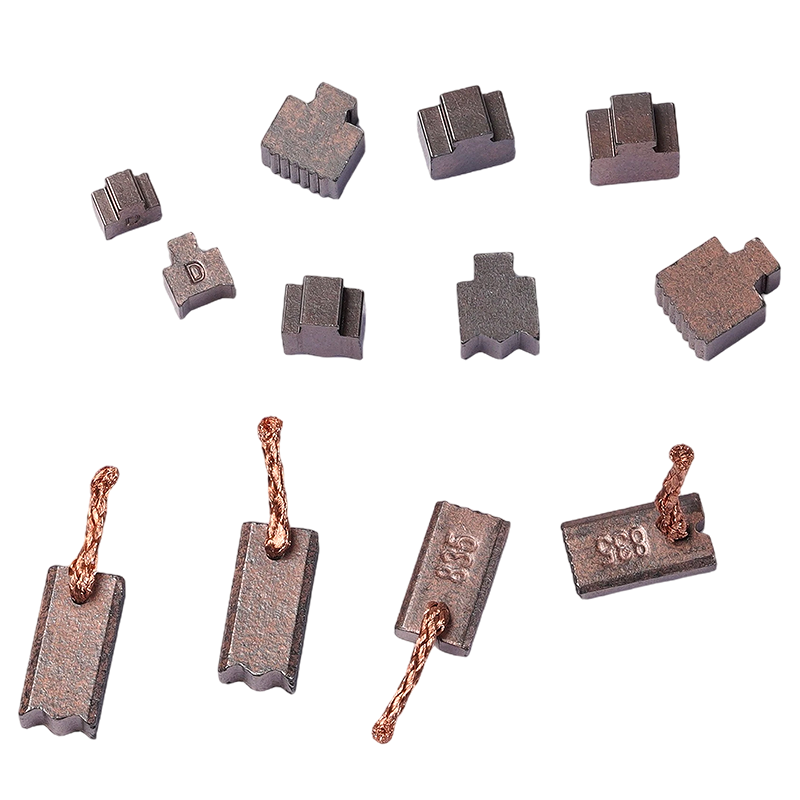 Custom Carbon Brushes for DC and Micro MotorsCustom carbon brushes for compact DC and micro-motor applications, intended for stable conductivity and long service life; confirm size before ordering.View Product →
In vehicle motors, forklifts, compressors, and other industrial machines, brush wear may appear as intermittent operation, voltage fluctuation, or a maintenance fault rather than a visible spark. Do not open a gearmotor or compressor without the service procedure. On an air compressor, worn brushes can cause weak starting, overheating, or repeated trips. Use the equipment manual and replace brushes as a set when the design calls for it. Our air-compressor brush range is one place to match common sizes, provided the original part number and dimensions are confirmed.
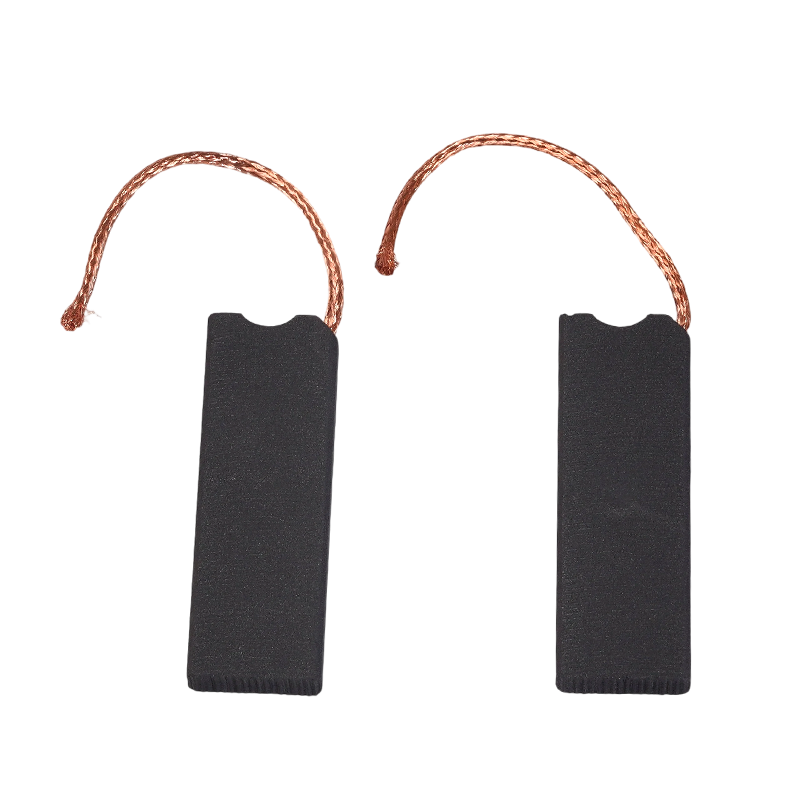 Custom Air Compressor Carbon BrushesCustom carbon brushes for industrial air-compressor motors, offered in specialized material grades; confirm part number and dimensions before replacement.View Product →
Worn brushes are a normal consumable, but wear rate is information. If a brush reaches its limit after years of normal use, replacement is routine. If a new set wears out in weeks, shut down and investigate. Common causes include the wrong brush grade, excessive spring pressure, a rough or eccentric commutator, vibration, contaminated air, or a holder that is not square to the commutator. In those cases, fitting another brush may hide the real problem and lead to repeat failures.
Also check whether the old brush was actually worn or just damaged during installation. A cracked new brush, a shunt pinched under a cover, or a terminal that was never tightened can imitate wear. Keep the old parts and note the machine's hours; that record makes the next inspection easier.
The most common mistake is ordering by brand and tool model alone. Carbon brushes are specified by dimensions, grade, spring pressure, and terminal arrangement. Measure the old brush with calipers where possible: width, height, and length; then note shunt length, terminal style, and any cap or holder detail. If the original is too worn to measure, use the motor or parts manual. A brush that is slightly too long may not seat; one that is too short may lose contact as it wears.
Grade matters too. A soft brush may run quietly but wear quickly; a harder grade may last longer but score the commutator if the motor is not designed for it. When in doubt, match the original specification rather than choosing by color or apparent density. That is one reason we keep application-specific ranges rather than a single universal compound.
Worn carbon brushes usually give you more than one warning: a change in performance, extra sparking, a hot smell, or a visibly short and chipped block. Check the simple clues first, inspect safely, and let the manufacturer's wear limit decide the replacement point. If the wear pattern looks unusual, take time to find the cause. A correct set of brushes, fitted properly, will keep the motor running smoothly—and the next inspection will be quicker because you will know exactly what to look for.

Phone:
+86-183 6280 9971
+86-513 8277 2222
Email:
 Custom Motor Carbon Brushes Manufacturers


 English
 中文简体