Nov 19, 2026
If you have ever opened an older DC generator and found three brushes instead of two, the extra contact can look like a mistake. It is not. A three-brush generator uses that third brush as part of a simple, mechanical field-control system. The arrangement was common on vintage automotive charging equipment, tractors, and other low-cost DC machines before electronic regulation became normal.
This guide explains what the third brush does, how the field circuit works, why output changes with brush position, and what to check when charging performance becomes unreliable.
A three-brush generator is a direct-current generator whose commutator carries three brush positions. Two main brushes handle the heavier current delivered to the battery and electrical loads. The third brush is a field-control tap. It supplies the field winding with a voltage picked off the armature at a deliberately offset point, rather than taking full terminal voltage.
The name can mislead. The third brush is not a spare output brush. It is usually a smaller control brush, and its mounting plate can often be shifted during service. Moving it changes field current, which changes magnetic field strength and generator output. That is why the same machine may be called a “third-brush regulated” generator: the brush itself is part of the regulation scheme.
A conventional two-brush DC generator has a field winding connected across the output, often through a separate regulator. A three-brush machine is different. Its field circuit is connected between the third brush and one main brush, so the field receives a voltage sampled inside the armature winding instead of at the full output terminals.
The exact wiring varies by design, but the principle is consistent: field current comes from a tapped point on the rotating armature. Because the field is self-excited, the generator builds voltage from residual magnetism and then uses its own output to strengthen the field.
A cutout relay is usually a separate part of the charging system. It disconnects the battery when the generator is not charging, but it does not set the charging rate. The third brush position and field circuit do that.
When the armature spins, its coils generate alternating voltage that the commutator turns into direct current. The field winding creates the magnetic field needed for generation. The third brush determines how much field current is available by sampling a point on the armature that is electrically offset from the main brushes.
As speed and load change, armature current produces armature reaction, a magnetic effect that distorts the main field. Because the third brush is deliberately displaced, this distortion changes the voltage available to the field circuit. The result is a rough self-regulating action: output tends to rise with speed, but the field supply is also affected by load and brush position, so the machine does not climb without limit.
This system is simple, but it is not precise. It cannot hold voltage to modern electronic standards. Temperature, brush wear, spring tension, and commutator condition all affect behavior. That is why service data usually gives a charging-rate test rather than a single exact voltage figure.
On many vintage generators, the third brush sits on a movable plate. Shifting it changes the amount of armature winding included between the field supply points, which changes field current and charging rate. The direction of adjustment is not universal, so the specific machine’s service manual is the authority.
Do not raise the charging rate to hide worn brushes, a weak battery, or poor connections. Overcharging can damage the battery and stress the field winding. The third brush is an adjustment point, not a repair for worn parts.
All three brushes are carbon contacts, and their condition matters as much as the electrical setting. The main brushes must carry load current; the third brush carries field current. Correct brush grade, spring pressure, and seating help maintain a stable commutator film. A glazed or grooved commutator, a sticking brush, a weak spring, or oil contamination can imitate a regulation fault.
Inspect brush length, wear pattern, free movement, and spring tension. Look for burned brush faces, loose leads, and uneven contact. For broader background, our article on carbon brushes in AC and DC generators explains how brush contact and field circuits interact in different machine types.
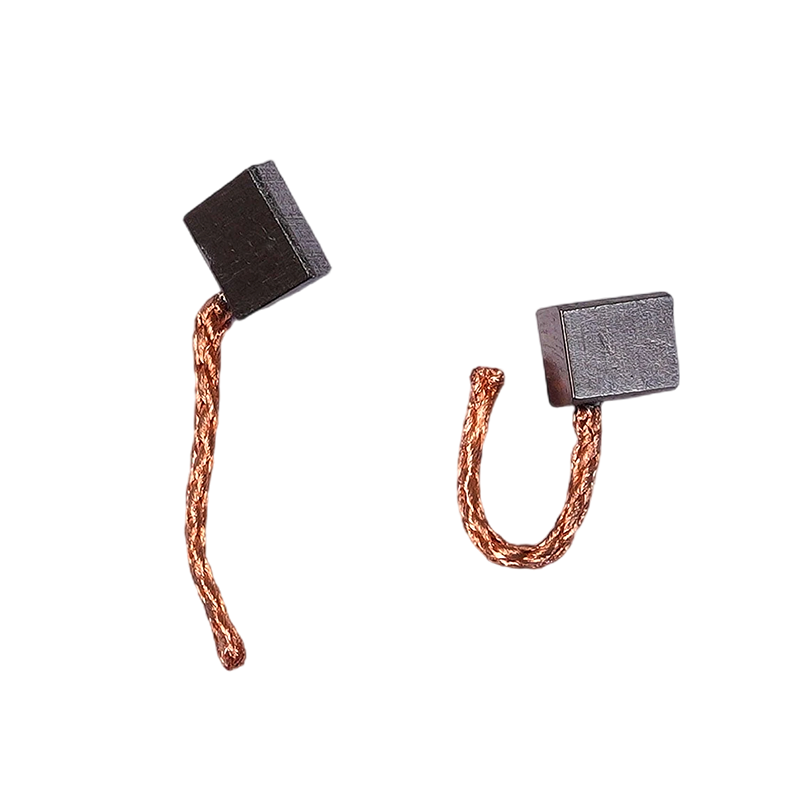 Common Automotive Motor Carbon Brushes and VariantsCustom carbon brushes for starters, wiper, fan, window-lift and fuel-pump motors, offered with variants and engineering support for replacement matching.View Product →
When replacement is needed, matching the brush dimensions, grade, and terminal arrangement is safer than forcing a close-sized brush into service. Our automotive motor carbon brush range is organized to help service teams compare common DC motor applications and replacement options.
Three-brush faults often look like regulator faults. Work through the brush gear, field circuit, drive condition, and connections before altering the adjustment.
| Symptom | Likely area | First check |
|---|---|---|
| No output at all | Field circuit or brushes | Brush contact, field continuity, residual magnetism |
| Output climbs with speed | Third-brush setting or field circuit | Third-brush position against service data |
| Low charging rate | Brush wear or poor contact | Brush length, spring tension, commutator film |
| Flickering or noisy output | Commutator or brush bedding | Free movement, seating, contamination |
| Overheating | Excessive field current or load | Charging rate, connections, bearing condition |
Mechanical third-brush regulation is elegant in low-cost machines, but it depends on brush position, speed, temperature, and load. It cannot hold precise voltage for modern electronics. Later charging systems used better electromechanical control, then alternators with rectifiers and solid-state regulation, to achieve more stable output with less maintenance. The three-brush generator remains relevant for restoration, vintage equipment, and understanding early DC control.
To understand a 3-brush generator, follow the energy path: rotation induces voltage in the armature; the commutator and main brushes deliver DC; the third brush taps armature voltage to feed the field; field current sets output; armature reaction and brush position provide crude self-regulation.
If output is wrong, do not only adjust the third brush. Inspect carbon brushes, commutator surface, springs, connections, and field winding first. At Hailing, we have spent decades making carbon brushes for power tools, appliances, automotive motors, and industrial machinery, and the same fundamentals apply here: clean contact, correct spring pressure, and the right material grade. When a brush is uncertain, dimensions and photos are the safest starting point.

Phone:
+86-183 6280 9971
+86-513 8277 2222
Email:
 Custom Motor Carbon Brushes Manufacturers


 English
 中文简体