Aug 21, 2026
An unplanned stop at a wind farm does not simply mean lost generation for an hour. It can mean a service crew, a crane contract, and, in the offshore case, a vessel day that costs more than the turbine produces in a month. The component that triggers many of these stops is surprisingly small: a carbon brush roughly the size of a soap bar. Wind turbine brushes carry current across rotating interfaces in the slip ring assembly, the pitch system, and the yaw motors. When they wear beyond their limit, arcing and heating follow quickly, and the turbine control system responds by shutting the unit down. Understanding how these brushes age, when they need to be replaced, and what to look for in a replacement is therefore a practical maintenance topic, not a theoretical one.
To maintain wind turbine brushes effectively, it helps to know exactly where they sit in the machine and what they do in each location. Modern turbines concentrate brush applications in three areas.
The slip ring assembly on the generator rotor is the most critical. The rotor winding needs excitation current, but the rotor is turning while the excitation source is stationary. Carbon brushes press against the slip rings and transfer that current reliably at rotational speeds that can exceed 1,500 rpm in some machines. Any contact failure here directly affects generator output and can trigger electrical protection devices.
The pitch system is the second area. Each blade is driven by a pitch motor, and the rotating hub needs power for those motors plus communication with the blade controllers. Slip ring units inside the hub carry those signals and currents, and the brushes in them operate under centrifugal load and temperature swings that accelerate wear.
The yaw system is the third area. As the nacelle rotates to track the wind, the wires connecting the fixed tower and the moving nacelle pass through a slip ring. The brushes in this assembly face lower rotational speeds but operate almost continuously, which creates a different wear pattern than the generator brushes.
All three locations share the same basic mechanism: a spring-loaded carbon block sliding on a rotating metal ring. The brush material, contact geometry, and surface condition of the ring decide how long the pair stays healthy. The same principle also governs conventional rotating electrical machines, which is why the maintenance logic parallels what we describe in our overview of carbon brush applications in AC and DC generators.
For replacement stock, a wind turbine carbon brush range removes much of the guesswork. When you evaluate options, check that the brush grade, dimensions, and lead configuration match the generator or slip ring model you are servicing.
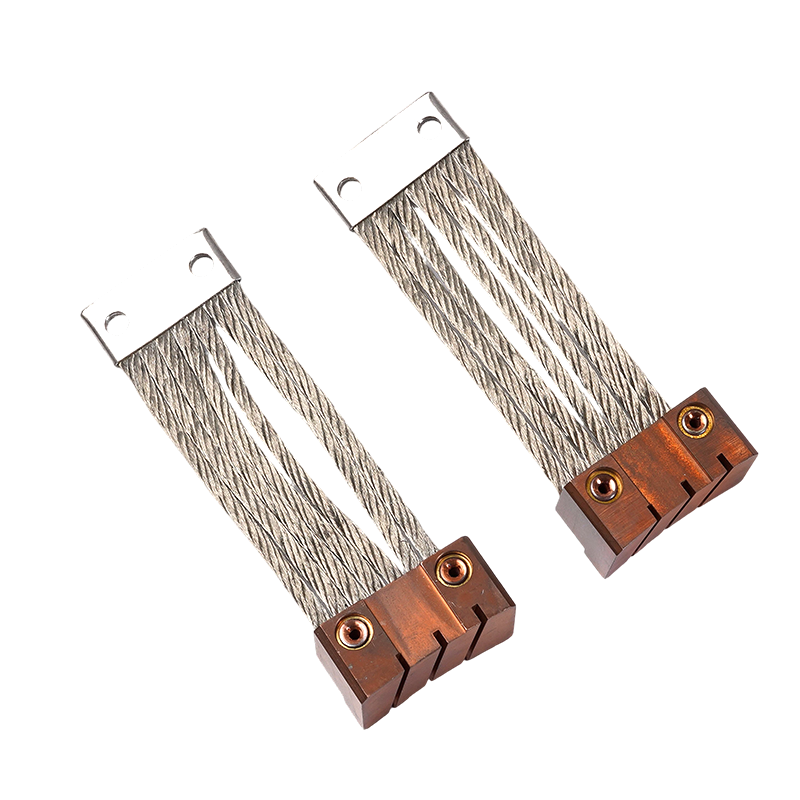 Wind Turbine Generator Carbon Brushes Suppliers, ManufacturersAs China wind turbine carbon brushes suppliers and manufacturers, Jiangsu Hailing Carbon Products Co., Ltd. custom wind turbine generator...View Product →
Estimating brush life is the first thing maintenance teams ask, and the answer is reassuringly concrete. Copper-graphite brushes in wind turbine slip rings typically last one to two years. Silver-graphite brushes, which contain a higher proportion of silver to stabilize contact resistance, usually last three to five years under the same operating conditions. These figures assume the brush is matched to the ring material, the spring pressure is within specification, and the environmental contamination level is normal.
The table below summarizes the two most common material families and what to expect from each.
| Parameter | Copper-graphite | Silver-graphite |
|---|---|---|
| Typical interval | 12-24 months | 36-60 months |
| Best-suited duty | Excitation and high-current slip rings | Signal, excitation, and low-current circuits |
| Relative cost | Lower | Higher |
| Common failure mode | Dusting and arcing after heavy wear | Glazing and edge chipping |
The gap between one year and five years is wide because several variables compress or extend life. A turbine in a high-wind site runs more hours and therefore accumulates more brush wear per calendar year. A slip ring that has developed surface scoring will accelerate brush loss regardless of material. Brush grade also matters: a grade with more graphite content wears more slowly but may run with higher contact drop, while a copper-rich grade conducts better but dusts faster at high current density.
For operators, the practical takeaway is to use the nominal replacement interval as a planning starting point, not as a fixed deadline. Combine the interval with visual and electrical checks at every scheduled service, and adjust the interval upward or downward based on measured wear.
Replacement timing does not have to be a guess. Worn brushes leave physical and electrical clues that are visible during a routine service visit or, in some cases, from the control room.
When several of these signs appear at once, the brush is not simply approaching the end of its life; it has reached it. Continuing to run in that condition risks damaging the slip ring surface, which turns a part-only repair into a machining job. If any of these symptoms show up between scheduled services, the correct response is to plan a replacement as soon as the turbine can be taken offline, and to follow the recommended brush replacement procedure when fitting the new brush. The steps matter: seating the brush, setting spring pressure, and cleaning the ring surface all influence how long the new brush will last.
Putting off a brush change saves a small price and risks a large one. A wind turbine brush costs little compared with the turbine, but the failure it prevents can cost days of production. In a 3 MW turbine operating at a capacity factor of 40 percent, one day of downtime represents roughly 30,000 US dollars in lost generation. Multiply that by a full wind farm and the arithmetic becomes uncomfortable.
There is also the secondary damage factor. When a brush wears past its limit, the resulting arcing can pit the slip ring surface. The turbine then needs more than a brush; the ring must be resurfaced or replaced, and the outage extends. In offshore environments, the logistics of a service vessel, crane availability, weather windows, and specialist labor multiply the cost of even a small repair. This is why operators with mature maintenance programs treat brush inspection as a scheduled task rather than a reaction to alarms.
Material choice also shapes the frequency of intervention. The demands on wind turbine brushes are far closer to those of other industrial machinery than to household appliance motor brushes. The differences in material grade, wear behavior, and acceptable tolerance are covered in our side-by-side comparison of industrial and household motor brushes.
Silver-graphite brushes also contain a meaningful amount of silver, which makes scrap recovery an additional consideration for high-volume operators. Because the silver content is both valuable and energy-intensive to produce, a disciplined replacement policy keeps that material cycling through maintenance programs rather than sitting idle in a worn part.
The right brush supplier does more than deliver a part that fits. They deliver a grade that matches the electrical and mechanical duty, documentation that supports quality audits, and consistency that makes each replacement predictable.
The first thing to verify is that the brush grade is engineered for slip ring duty, not a generic motor grade. For wind turbine slip rings, the brush typically needs a high graphite content for low friction, a metal content that provides adequate conductivity without excessive wear, and a lead assembly that keeps the electrical connection secure. Ask for the physical dimensions, the hardness, and the specific resistance of the brush. A supplier who cannot state these values is not building to a specification.
Because turbine manufacturers and operators are heavily audited, the brush manufacturer's own quality management matters as much as the product. Certifications such as ISO 9001 and IATF 16949 indicate that the factory controls processes from raw material to final inspection. For automotive-derived quality expectations, IATF 16949 is particularly relevant even in wind energy because the same manufacturing discipline transfers directly.
Engineering support is the second pillar. Wind turbine brush replacements are not always a one-to-one match for an existing part number. Blade pitch controllers, generator suppliers, and turbine OEMs have all used different brush grades over the years, and an older machine may need a custom dimension or lead length. A supplier with in-house engineering and custom tooling can close that gap without sending you to three different vendors.
Finally, delivery reliability separates a capable manufacturer from a trading desk. Wind farm maintenance is planned around weather windows and service vessel schedules; a brush that arrives late undermines the whole plan. Our production experience in carbon brushes for wind turbines covers the full manufacturing cycle, from material selection to batch testing, and our industrial machinery carbon brush range spans compressors, robots, and logistics equipment as well as wind turbine applications. For buyers, the practical benefit is one qualified source that holds the same quality standard across all industrial brush types.
Industrial Machinery Carbon Brushes Manufacturers, FactoryAs China industrial machinery carbon brushes manufacturers and factory, Jiangsu Hailing Carbon Products Co., Ltd. offers OEM/ODM industri...View Product →Wind turbine brushes sit low in the bill of materials, but high in the list of components that determine whether a turbine runs. Their replacement interval is not guesswork; copper-graphite brushes typically last one to two years, and silver-graphite types three to five years, with the actual life depending on site conditions, ring surface, and material grade. Visual and electrical warning signs make proactive replacement possible, and the cost of an early change is trivial compared with the cost of unscheduled downtime.
For maintenance teams and procurement managers, the practical conclusion is to treat wind turbine brushes as a planned consumable, choose the grade on evidence rather than habit, and work with a supplier that has the material knowledge and quality systems to back the product.

Phone:
+86-183 6280 9971
+86-513 8277 2222
Email:
 Custom Motor Carbon Brushes Manufacturers


 English
 中文简体
中文简体