Sep 04, 2026
A maintenance engineer replaces the carbon brush in a small DC motor, but sparking returns within days. The dimensions are correct, the spring tension is right, yet the motor still runs hot. The most overlooked cause is the carbon brush grade. The grade determines how the brush behaves on the commutator, how much current it can carry, and how long it will last. Choosing a grade by habit or by nearest size can lead to premature failure, excessive commutator wear, or unsafe operation.
A carbon brush grade is a precise formulation of carbon, graphite, copper, or silver powders bonded together and processed through specific production steps. The manufacturing process—especially the heat treatment temperature—controls the final crystalline structure. That structure, in turn, governs electrical resistance, contact voltage drop, friction coefficient, hardness, and the brush's ability to form a stable film on the commutator.
Brush grades are grouped into families so engineers can narrow down a starting point quickly. The family name is a shorthand for the base material and the processing route. The grade itself, however, still has to match the specific operating conditions of the motor.
Nearly every carbon brush manufacturer uses the same broad classification. The five families are carbon graphite, electrographite, graphite, metal graphite, and silver graphite. Each family has a different balance of properties, which makes it suitable for a different range of motors.
| Family | Base Material | Typical Resistivity | Typical Applications |
|---|---|---|---|
| Carbon graphite | Bonded carbon | Medium | Universal motors, older DC motors, flush-mica commutators |
| Electrographite | Heat-treated carbon | Low | High-speed, high-current motors, new industrial motors |
| Graphite | Natural or synthetic graphite | Very low | Low current, high speed, low friction needs |
| Metal graphite | Carbon + copper or silver | Lowest | Low voltage, high current, 12V/24V systems |
| Silver graphite | Carbon + silver | Very low | Tachometers, sensors, precision contact devices |
Carbon graphite brushes are the oldest family. They work well on motors with flush mica commutators and moderate speeds, but they produce more resistance and heat than modern grades.
Electrographite grades are made by graphitizing the carbon at temperatures above 2,000°C. This creates a hard, dense brush with low resistivity and excellent current-carrying capacity. They are the standard choice for industrial motors and high-power DC machines.
Graphite brushes have very low friction and a low coefficient of friction, which makes them suitable for high-speed, low-current applications where film stability is more important than current capacity.
Metal graphite brushes contain copper or silver powder. The metal content gives them very low contact voltage drop, allowing them to pass high current without overheating. They are common in 12V and 24V systems, such as automotive starter motors and forklift motors.
Silver graphite is a specialty grade where silver is added to achieve the lowest possible contact resistance. These brushes are used in tachometers and other instruments where signal stability matters more than current.
When comparing grades, several measured values act as indicators. The three most important are voltage drop, friction coefficient, and film code.
Other properties—hardness, density, resistivity, current density, and maximum operating temperature—help narrow the selection further. A data sheet from the manufacturer will list these values for each grade, and they are the basis for initial screening.
Start with the motor nameplate and load profile. Collect the system voltage, continuous current, peak current, rated speed, duty cycle, and ambient conditions. Then decide which family fits the application. For example, a 48V industrial motor running at 3,000 rpm with steady load will likely need an electrographite grade. A 12V automotive actuator will need a metal graphite grade to handle high current at low voltage.
Next, check the current density. The brush grade has a recommended current density range. If your motor exceeds that range, the brush will overheat, wear quickly, or cause sparking. If you are below the range, the brush may not form a proper film, leading to high friction and erratic performance.
Finally, confirm the brush dimensions, the shunt connection, and the holder spring pressure. Some grades are softer and require lower spring pressure to avoid excessive wear. The manufacturer's technical data or a custom engineering discussion can help you match these parameters. For a complete overview of our standard carbon brush products, visit our carbon brush product range.
Different industries have different performance priorities. The same grade may work well in one motor and fail in another. The following sections look at three common application areas where grade selection matters most.
Power tool motors are typically universal motors running at high speed, with frequent starts and high torque. They draw high current but are small and compact. Electrographite or high-quality carbon graphite grades are often used because they balance current capacity with wear resistance. However, the correct grade also depends on the tool's operating voltage and the brand-specific brush size. When replacing brushes in a Bosch or Makita tool, matching the original grade rather than just the dimension is important for avoiding smoke, sparks, and rapid brush wear.
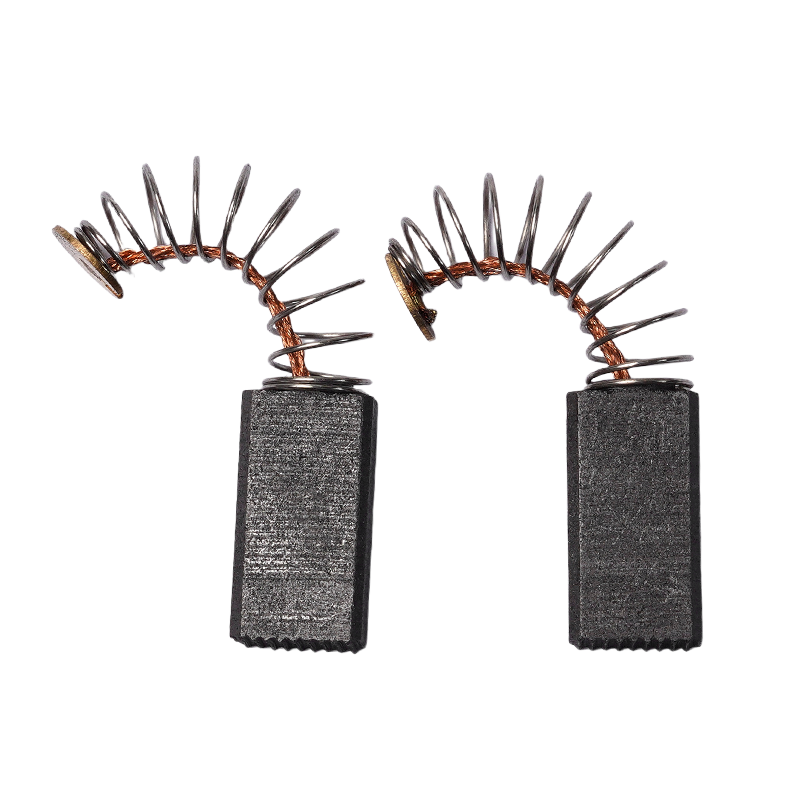 Carbon Brushes for Universal Power Tools Multiple Grades AvailableThese carbon brushes are designed for universal motors in power tools, balancing current capacity and wear resistance. Matching the original grade is crucial to avoid sparks and rapid wear in tools like Bosch or Makita.View Product →
Appliances like washing machines, vacuum cleaners, and treadmills run for extended periods and often operate in high-humidity or dusty conditions. Washing machine motors require brushes that tolerate frequent reverse rotation and high moisture. The wrong grade can cause excessive commutation arcing, which will eventually burn the commutator. If you are servicing a washing machine, see our detailed guide on how to identify and replace washing machine carbon brushes before choosing a replacement.
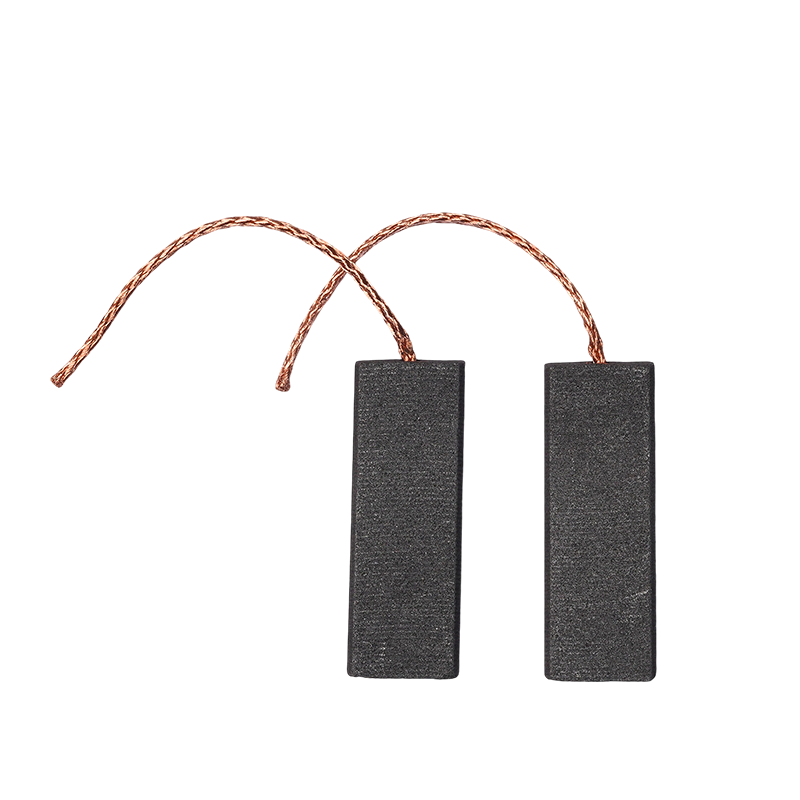 Washing Machine Carbon Brushes in Various ConfigurationsThese carbon brushes are suited for washing machine motors, which require tolerance to frequent reverse rotation and high moisture. They ensure stable power and long-term reliability, available with or without springs and brush holders.View Product →
Automotive motors operate from a 12V or 24V supply, which means high current for the power delivered. The brushes must have very low voltage drop to prevent overheating. Metal graphite grades are the typical solution for wiper motors, fan motors, and other body components. In low-voltage systems, even a small resistivity difference can affect relay and control signals, especially in windshield wiper motors. Using the correct grade reduces the risk of intermittent operation and short brush life.
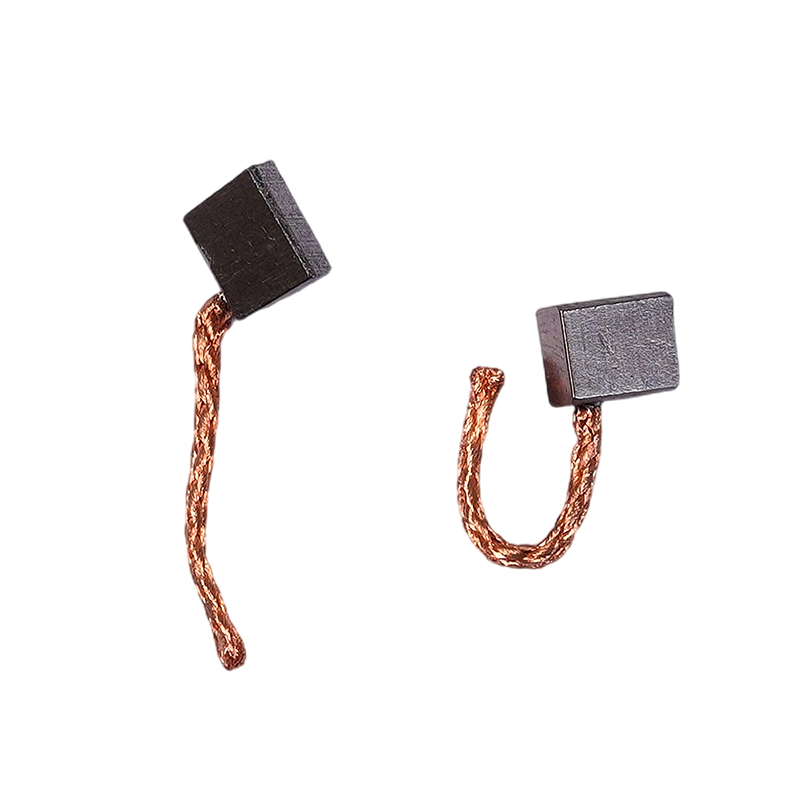 Automotive Wiper Motor Carbon Brushes for Low-Voltage SystemsThese metal-graphite carbon brushes are designed for automotive windshield wiper motors, ensuring low voltage drop to prevent overheating. They provide reliable conductivity and long-lasting performance in all weather conditions.View Product →
Standard grades cover most applications, but some motors run in unusually demanding conditions. Process equipment, wind turbines, or specialized DC drives may require a custom formulation to achieve the right film formation and wear rate. A carbon brush manufacturer with an engineering department can adjust the material composition, the binder ratio, and the heat treatment process to match the motor's unique characteristics. This is where a supplier's experience becomes valuable. For example, a manufacturer that produces brushes in large volumes and controls the whole process from raw powder to finished brush can provide consistent quality and help you fine-tune the grade for a specific application.
Our company has more than 20 years of experience in precision carbon brush manufacturing. With a dedicated engineering service and a new production facility, we support customers who need custom brush sizes, custom shunts, or special grade formulations. If your motor has unusual electrical or environmental requirements, working with the manufacturer during the selection stage is often the simplest way to avoid trial and error on the production line.
Brush grades are not fixed forever. If you change the motor load, increase the operating temperature, or modify the control system, the brush grade that worked before may no longer be optimal. Signs that a grade change is needed include blackened commutator, excessive sparking, rapid brush wear, unequal wear across brushes, or visible dust. If any of these symptoms appear, it is better to reassess the grade rather than simply replace the brushes with the same part.
In summary, the selection of a carbon brush grade is an engineering decision, not a matter of guesswork. Understanding the grade families, the performance characteristics, and the specific demands of the application will help you avoid costly failures. When in doubt, contact a carbon brush manufacturer with a proven track record in producing consistent, application-matched grades.

Phone:
+86-183 6280 9971
+86-513 8277 2222
Email:
 Custom Motor Carbon Brushes Manufacturers


 English
 中文简体
中文简体