Sep 11, 2026
When a washing machine suddenly stops mid-cycle, the usual suspect is not the motor winding or the capacitor. It is often two small blocks of carbon that have worn down to a fraction of their original length. The brushes in that motor were the parts carrying current into the rotating armature, and after years of use, they had simply reached the end of their service life. This is a common pattern in any brushed motor: the brushes work continuously, they wear, and they eventually need replacement. Understanding what brushes do in a motor lets you diagnose faults, choose the right replacement grade, and avoid premature motor failure.
Brushes are sliding electrical contacts that create a low-resistance path between the stationary cable and the moving commutator or slip rings on the rotor. Their job is not just to pass current; they also regulate the timing of current flow in each winding, which is called commutation. Without brushes, a brushed motor could not create continuous torque because the rotor windings would not receive power at the correct moments.
Carbon-based compounds are used because they combine electrical conductivity with self-lubricating properties. Unlike metal brushes, carbon wears gradually and deposits a thin film on the commutator, reducing friction and sparking. Copper or silver brushes might conduct better, but they weld to the commutator and create short circuits. Carbon's moderate hardness and high melting point make it the practical choice for most AC/DC motors.
The phrase "carbon brush" actually covers a family of materials that includes carbon-graphite, copper-graphite, and electrographite. Each formula is tuned for a specific balance of conductivity, wear rate, and contact resistance.
As brushes wear, the spring pressure decreases, so the contact point becomes unstable. This leads to arcing between the brush and the commutator. Arcing creates heat and can burn grooves into the copper commutator segments. In many cases, the motor will stop because the brush no longer reaches the commutator, rather than because the winding has failed.
In a motor designed with a 15 mm brush, a brush worn down to 4 mm often cannot maintain reliable contact. The motor may still turn at low load, but under load it will hesitate, spark, or shut off completely. This is why manufacturers set a recommended minimum brush length.
Before replacing brushes, measure the remaining length. Manufacturers specify a minimum brush length, usually about 30% of the new dimension. Also inspect the commutator for burn marks, scoring, or loose strands. If the commutator is damaged, new brushes alone will not fix the problem.
In washing machines, the brushes carry high current through the drum motor during spin cycles. They experience high humidity and frequent start-stop conditions. A worn brush in a washing machine can cause the drum to stop mid-cycle or trip the thermal protection. Replacing the brushes is a routine repair that avoids replacing the whole motor.
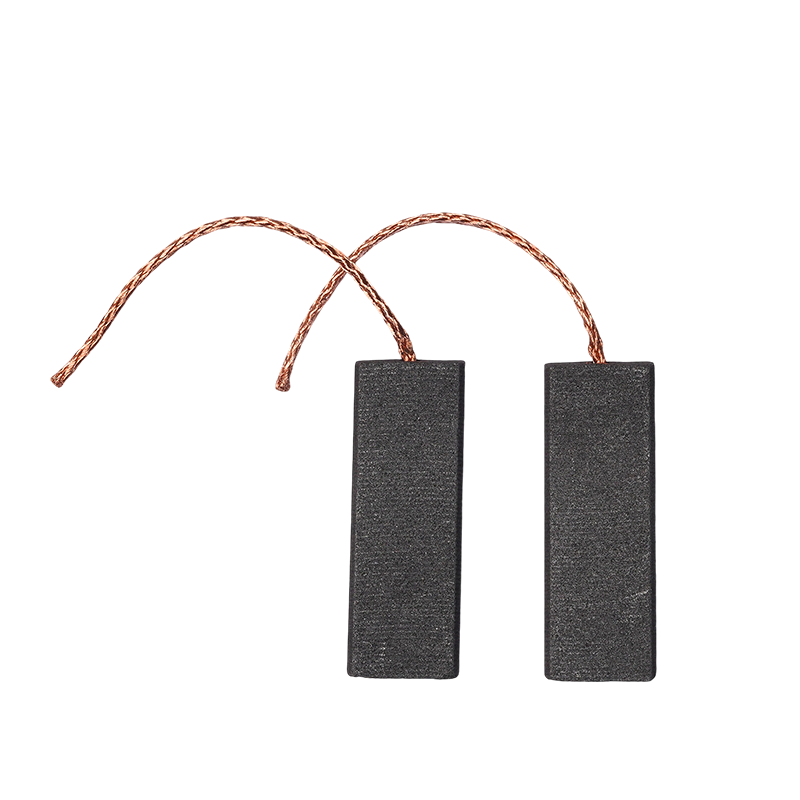 Washing Machine Carbon Brushes for Drum MotorsThese brushes are designed for washing machine drum motors, ensuring stable power and smooth rotation. They are suitable for replacing worn brushes that cause mid-cycle stops or thermal trips.View Product →
If you are working on a washing machine motor, read our guide on how to identify and replace washing-machine carbon brushes before you order parts.
Car engines use dozens of small motors with brushes: wiper motors, fan motors, window lifters, and the starter motor. Each of these motors has its own brush grade. Wiper motors, for example, run in rain, snow, and road salt, so the brush material must resist moisture and deliver stable torque at low speed. A worn wiper motor brush can make the wipers move slowly or stop.
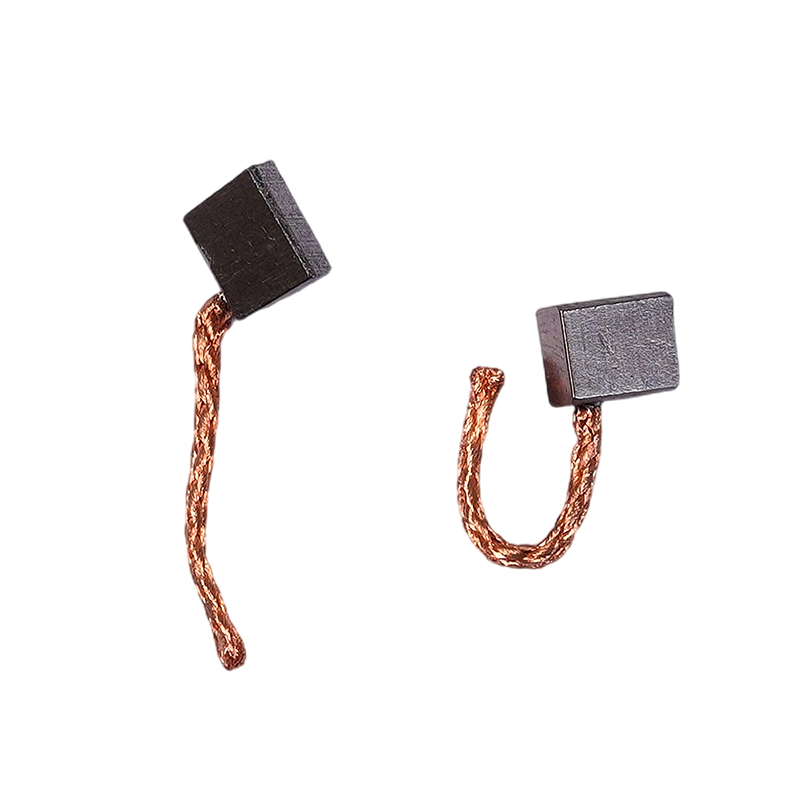 Automotive Windshield Wiper Motor Carbon BrushesThese carbon brushes are made for wiper motors to deliver reliable conductivity and torque in all weather. They resist moisture and help maintain steady wiper operation.View Product →
Power tools such as drills, grinders, and circular saws use high-current brushes that must tolerate heavy vibration and high sparking. The brush grade is selected to match the tool's speed and current draw. When a power tool starts to feel weak or the commutator shows blue discoloration, the brushes are often the culprit. Quick replacement restores the tool's performance for a fraction of the cost of a new tool.
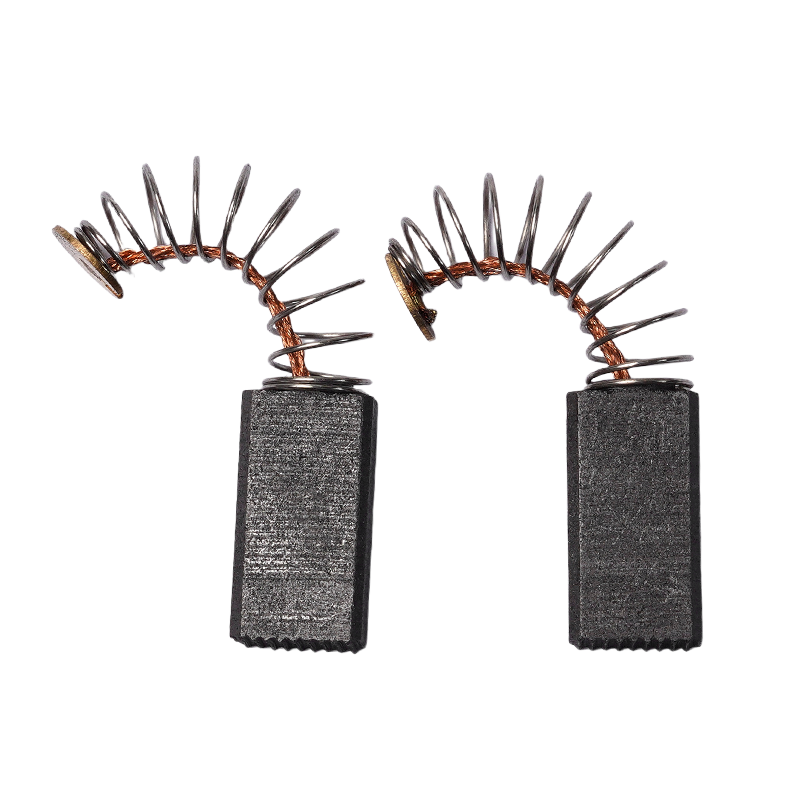 Universal Power Tool Carbon Brushes ReplacementThese carbon brushes are compatible with various power tools like drills and grinders, restoring performance when weak or sparking. They are a cost-effective alternative to replacing the tool.View Product →
If you want to understand the basics before buying, read our article on what power tool carbon brushes are and how they work.
Different motor applications demand different brush materials. Softer grades run quieter and wear faster, which suits household appliances that rarely run continuously. Harder electrographite grades tolerate higher current loads and keep their shape better, which makes them common in industrial motors. The table below summarizes typical selection factors.
| Application | Typical Brush Material | Main Wear Indicator |
|---|---|---|
| Washing machine motors | Carbon graphite | Drum stops mid-cycle |
| Automotive wiper motors | Copper-graphite | Slow wipers, arcing |
| Power tool motors | Electrographite | Weak torque, blue-tinged commutator |
| Industrial DC motors | Electrographite or graphite | Visible brush length below minimum |
When you buy replacement brushes, pay attention to the grade and hardness. Softer brushes are quieter but wear faster; harder brushes last longer but are more aggressive to the commutator. Check the spring pressure as well; the brush holder must apply the correct force. Always seat the brushes so that the beveled face matches the commutator's rotation direction.
If you cannot find the exact grade, choose a known carbon-graphite grade from a manufacturer that specializes in motor brushes. A supplier with IATF 16949 and ISO 9001 evidence can usually provide traceable material and consistent hardness. This matters because inconsistent brushes can cause uneven wear and rapid failure.
Brushes are a small but critical component in brushed motors. They conduct current, control commutation, and wear predictably. By understanding what brushes do and how to inspect them, you can extend motor life and avoid unnecessary replacements. Whether you maintain washing machines, car motors, or power tools, checking the brushes first is often the fastest path to solving a no-start or weak-performance problem.

Phone:
+86-183 6280 9971
+86-513 8277 2222
Email:
 Custom Motor Carbon Brushes Manufacturers


 English
 中文简体
中文简体