Oct 27, 2026
If you've ever opened up a power tool, a washing machine, or a starter motor, you've probably noticed a small black block pressed against a spinning metal surface. That unassuming component is a carbon brush, and it is one of the most vital parts in any brushed motor. After more than twenty years of manufacturing carbon brushes for power tools, household appliances, automotive components, and industrial machinery, we've learned that a little understanding goes a long way. In this article, we'll explain how carbon brushes work and when they need to be replaced, why they wear out, and what to look for when choosing a replacement.
A carbon brush is an electrical contact that conducts current between the stationary part of a motor and the rotating part. Typically made from a blend of graphite, carbon, and sometimes copper or other metal powders, the brush is held against the commutator or slip ring by a spring. As the motor shaft spins, the brush stays in sliding contact, allowing current to flow into the rotor windings or out of them.
Carbon is the material of choice for a good reason. It is conductive enough to carry useful current, yet soft enough not to damage the metal surface it rides against. The graphite content gives it natural dry lubrication, which is why brushed motors do not need additional oil or grease around the commutator. Different operating conditions call for different grades, which is why manufacturers offer brushes with varying hardness, resistivity, and metal content.
Understanding how carbon brushes work really comes down to the sliding contact between two surfaces. Here is what happens every time the motor runs.
The brush is connected to the stationary wiring, and the spring pushes it firmly against the commutator, the segmented metal cylinder mounted on the shaft. As the shaft rotates, the brush maintains a continuous electrical path between the power supply and the rotor windings.
In a DC or universal motor, the commutator segments are arranged in a circle, and the brush makes and breaks contact with each segment in sequence. This process, called commutation, reverses the current direction in the rotor windings at precisely the right moment, keeping the motor spinning in one direction with steady torque. If the contact quality is poor or the spring pressure is too low, you will see sparking at the brush face.
Graphite has a layered crystal structure that allows the layers to slide over one another. As the motor runs, tiny particles of graphite transfer onto the commutator surface and form a thin, dark film. This film reduces friction, keeps wear low, and protects both the brush and the commutator from damage. That is why a new brush often needs a short bedding-in period before it runs quietly.
The sliding contact generates friction and heat, and the current flow adds electrical resistance heating. Carbon brushes are designed to handle both, but they cannot last forever. Over time, the brush gradually becomes shorter, which is completely normal and is why brushes are made as replaceable parts. The fine dark dust you sometimes find inside a motor after years of use is simply the remains of normal brush wear.
Not every motor uses a commutator. In AC motors such as wind turbine generators or wound-rotor motors, brushes ride on continuous slip rings instead of segmented commutators. Here there is no commutation to perform; the brush simply carries current into or out of the rotating winding. The contact requirements are the same, but the wear pattern can be different, which is why generator brushes are often a different grade from tool or traction brushes.
Not all carbon brushes are the same, and the way a brush behaves in a small household motor is different from the way it behaves in a large industrial machine. The grade, hardness, and metal content are tailored to the motor's speed, voltage, and duty cycle. The table below gives a quick overview of common applications.
| Application | Typical Motor Type | What the Brush Does | Key Requirement |
|---|---|---|---|
| Power tools | Universal motor | Provides high-current commutation at high speed | Wear resistance and low sparking |
| Household appliances | AC, DC or universal motor | Reliable start-stop and speed control | Quiet, consistent contact |
| Automotive motors | DC permanent magnet motor | Powers wipers, fans and windows | Long life in demanding conditions |
| Industrial machinery | AC slip-ring or DC motor | Carries current to rotating windings | Stable performance under continuous duty |
For power tools, brush wear is the first thing to check when a drill or angle grinder loses power, runs intermittently, or throws up a shower of sparks. The right brush grade makes a real difference in both tool performance and commutator life, which is why we offer dedicated ranges for universal power tools and garden tools.
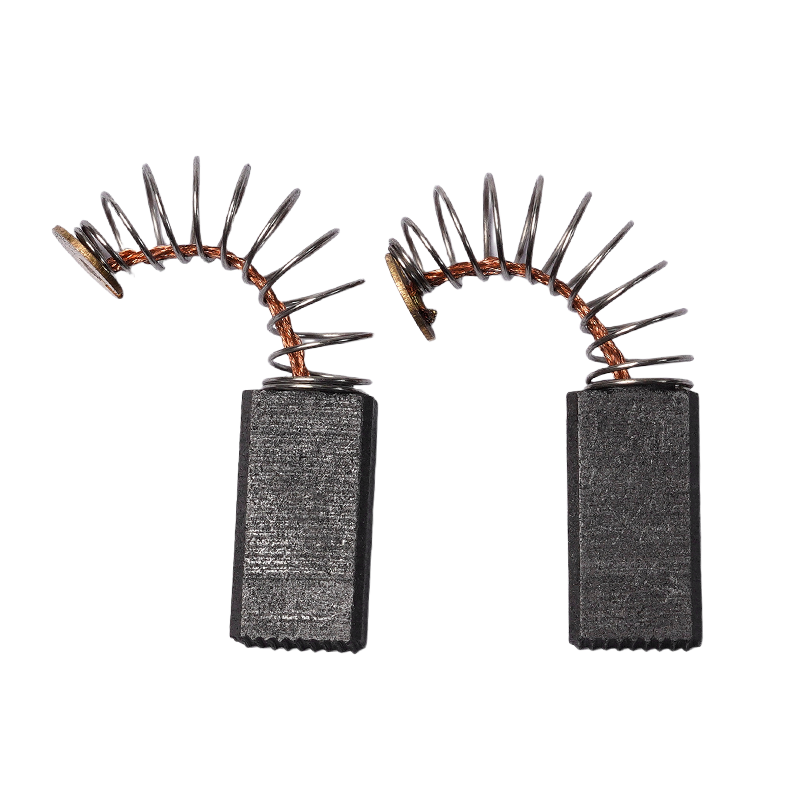 Power Tools Carbon Brushes for Reliable Motor PerformanceExplore dedicated brush grades for universal power tools and garden tools, engineered to maintain conductivity and extend commutator life during demanding use.View Product →
Household appliances such as washing machines, vacuum cleaners, and treadmills place different demands on brushes: quieter operation, longer replacement intervals, and tolerance for frequent stop-start cycles. A well-matched brush grade shows up in how smoothly the appliance runs over the years.
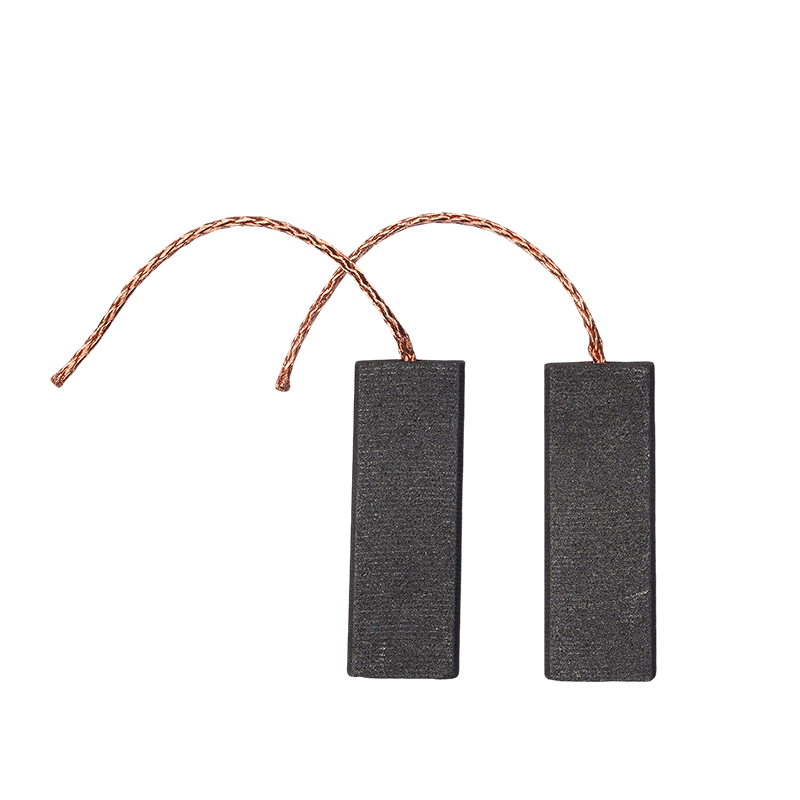 Household Appliance Carbon Brushes for Quiet, Long-Lasting MotorsFind brushes suited for washing machines, vacuum cleaners, and treadmills, designed for smooth operation, longer replacement intervals, and frequent stop-start cycles.View Product →
At the industrial level, wind turbines, air compressors, industrial robots, and logistics equipment depend on carbon brushes for continuous-duty operation. Here, stable contact pressure and long brush life matter most, because unscheduled downtime is expensive.
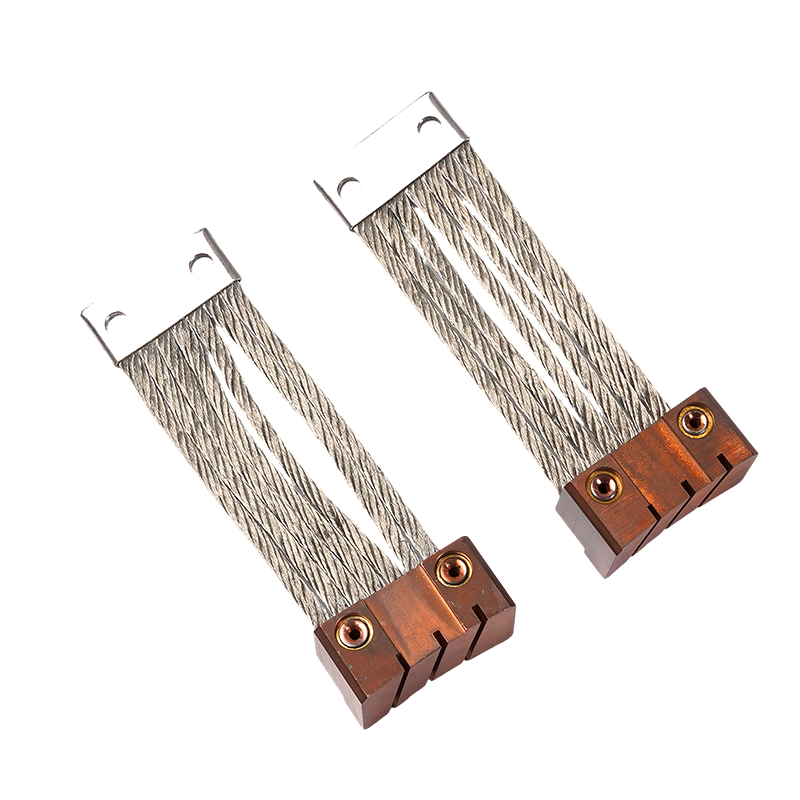 Industrial Machinery Carbon Brushes for Continuous-Duty OperationsReview heavy-duty brush options for wind turbines, air compressors, and robotic systems, prioritizing stable contact and wear resistance to prevent costly downtime.View Product →
Because carbon brushes are wear parts, knowing the signs of wear can save you from a bigger repair bill. Common indicators include the following:
If you notice any of these signs, inspect the brushes first. Replacing a worn brush is inexpensive, but ignoring it can damage the commutator, which is much more costly to repair. Choosing a quality replacement is just as important as replacing it in time.
As a manufacturer, we see exactly what goes into a good brush. The process starts with the right raw materials, carefully mixed, pressed to the correct density, and then fired to achieve the desired hardness and resistivity. Every step affects how the brush performs in the motor. That is why we follow ISO 9001 procedures, measure each batch, and test brushes under conditions that mimic real motor operation.
Beyond standard products, custom engineering is often needed for unusual motors or demanding applications. The shape of the brush, the length of the shunt wire, the type of terminal, and the spring force all have to match the motor design. A brush that fits perfectly but has the wrong grade will still perform poorly, so both geometry and material matter.
Carbon brushes may be small, but they carry the current that makes a motor turn. Understanding how carbon brushes work, the sliding contact, commutation, self-lubrication, and gradual wear, helps you choose better replacements, keep motors running longer, and avoid avoidable failures. Whether you are servicing a single appliance or sourcing brushes for an entire product line, a reliable supplier with consistent quality makes all the difference.

Phone:
+86-183 6280 9971
+86-513 8277 2222
Email:
 Custom Motor Carbon Brushes Manufacturers


 English
 中文简体